TRADER PSYCHOLOGY
The Psychology of Elite Traders: What Separates the 1% Who Last
"The rare traders who last decades all share the same three things: extreme self-awareness, a genuine willingness to be wrong, and obsessive process discipline. That combination is rarer and harder to sustain than running a business, because the feedback loop is brutal, daily, and financially personal."
Every year, thousands of people with excellent business instincts, sharp analytical minds, and genuine drive sit down in front of a futures chart and proceed to lose money. Not because they are unintelligent. Not because they cannot read a market. But because the psychological demands of trading at a high level are categorically different from almost every other high-performance discipline, and most people arrive with the wrong mental operating system installed.
The traits that make someone a successful founder, executive, or negotiator can be actively lethal in a trading account. Meanwhile, the traits that look like weaknesses in a boardroom, things like an obsessive ability to tolerate ambiguity, comfort with being publicly wrong, and a willingness to do nothing for long stretches, turn out to be core edges in the market.
This post maps the psychological profile of elite traders, the specific traits that get amplified in trading versus general business, the traits that are unique to trading and almost never discussed outside of it, and the business instincts you may carry right now that will actively work against you if you do not identify and suppress them.
Why Trading Psychology Is a Different Problem
Most performance psychology content treats trading psychology as a subset of general high-performance mindset work. That framing is wrong, and it is part of why the same trader who reads every mindset book can still blow three accounts in a row.
The difference is the feedback loop. In business, you get quarterly results, annual reviews, and multi-year trend data. You can hide from bad decisions for months. The social context is forgiving: other people can be blamed, markets can shift, timing can be excused. A bad hire, a failed product launch, a mispriced contract: all of these hurt, but none of them deliver real-time, publicly visible, financially exact, emotionally raw feedback the way a losing position does.
In trading, the feedback is daily and precise. You are wrong or right. You made money or you did not. The position is up or down this exact second. There is no ambiguity, no room to spin the narrative, no quarterly review where you can frame the loss as a strategic investment. The market is a perfect truth machine, and it runs on you emotionally in real time.
That is why the psychological demands of trading are not just "higher" than business, they are structurally different. And the traits you need to survive them are worth mapping explicitly.
Traits That Are Amplified in Trading
These traits matter in business too, but in trading their importance is multiplied to a degree that most people do not anticipate until they have already experienced the consequences of not having them.
Pain Tolerance
This is the foundational trait. Not pain tolerance in the gym or in a difficult negotiation, but the specific ability to lose money daily, repeatedly, and publicly, while staying rational enough to execute the next trade correctly.
Most people quit here. Not because their strategy is broken. Not because they cannot read a chart. But because the daily experience of being wrong and losing real money, even when that loss is within their plan and consistent with their edge, is more psychologically costly than they expected. The cortisol response to financial loss is physiologically real. It degrades decision-making. It triggers the fight-or-flight response. And it has to be managed in real time, with the next trade setup already forming on screen.
Professional traders are not people who do not feel this. They are people who have built the internal infrastructure to feel it and continue operating correctly anyway. That infrastructure takes time, repetition, and usually a significant number of painful lessons to construct.
The Pain Tolerance Test Most Traders Never Take
Before scaling to live trading, ask honestly: can you take five consecutive losing trades, all within your plan, and still execute the sixth with the same precision and sizing? If the answer is no, that is the gap to close before size matters.
Internal Locus of Control
Blaming the market is career-ending in trading. Not because the market is never irrational, it frequently is, but because blame-as-default is a thought pattern that prevents you from ever identifying and correcting the actual problems in your process.
Every trader who survives long-term operates from the premise that the trade was wrong because they were wrong. Maybe the setup was valid but the sizing was too large. Maybe the entry was premature. Maybe they held a loser past their defined exit because they wanted to be right. Whatever the cause, it is theirs to own and correct.
In business, you can negotiate outcomes, manage stakeholders, and sometimes genuinely attribute failure to external factors. In trading, external attribution is a psychological dead end. The market did not do anything to you. You took a trade, and the market moved. How you managed that position from entry to exit is entirely your responsibility.
Unsentimental About Positions
This is the trading equivalent of being unsentimental about people in business. Elite operators can let go of an employee who is not performing, even one they like personally, because the evidence is clear and the cost of inaction is higher than the cost of the decision. Elite traders apply that same logic to positions.
The position that is not working needs to be cut. Not when it reaches your original stop, not after you have added to it hoping for a reversal, not after you have moved the stop to "give it room," but at the predetermined exit. The moment you start negotiating with a losing position, the position is no longer a trade. It is an ego protection exercise, and it will cost you far more than the original planned loss.
Kill losers fast. Let winners run. This is the mechanical rule, but the psychological requirement underneath it is the ability to be unsentimental about being wrong, in real time, with real money on the line. That is harder than it reads.
Asymmetric Risk Appetite with Strict Sizing
The best traders are simultaneously aggressive and controlled. They take large positions when the setup justifies it, and they maintain strict sizing discipline to ensure that no single trade, regardless of conviction, can materially damage the account. That combination is rarer than it sounds.
Most people are either aggressive without discipline, which leads to outsized losses on high-conviction trades that do not work, or disciplined without aggression, which leads to an inability to capitalize when their edge is genuinely present. The elite trader holds both simultaneously. High risk when the setup is exceptional. Strict sizing always.
In prop firm trading, this dynamic plays out on a structural level. Your maximum drawdown is fixed. Your ability to make money is directly tied to how aggressively and accurately you can deploy risk within that constraint. The traders who pass challenges and sustain funded accounts are not conservative. They are precise. There is a meaningful difference.
Compounding Mindset and Patience
Buffett, Simons, Druckenmiller: all of them let winners run. Simons's Medallion fund held positions across months and years when the quantitative signal supported it. Druckenmiller famously describes his edge not as being right more often than others, but as making much more money when he is right than he loses when he is wrong. That asymmetry requires patience at the position level and faith in the process at the system level.
In retail and prop firm trading, the compounding mindset shows up differently. It is the discipline to stay within your daily loss limit and survive to trade the next day. It is the refusal to blow a good week by revenge trading on a Friday afternoon. It is the understanding that consistent small edge over hundreds of trades compounds into a meaningful return, and that protecting the compounding engine is more important than any individual trade outcome.
If you look at your trading in terms of individual trade results rather than process quality over a statistically significant sample, you are not yet thinking in compounding terms. That shift in perspective is not cosmetic. It changes what decisions you make under pressure.
Speed Over Perfection in Execution
Paralysis in trading is fatal. The setup appears, the entry conditions are met, and the trader who spends 30 seconds deliberating gets a worse fill, a tighter stop, or misses the trade entirely. In execution, certainty is a luxury that the market does not offer. The decision must be made with incomplete information, in real time, under the psychological pressure of real capital at risk.
This does not mean impulsive. The plan is built before the market opens. The setup criteria are defined in advance. When the setup appears, execution is the output of a pre-made decision, not a new deliberation. The pre-trade planning phase can be slow and thorough. The in-trade execution phase must be fast and automatic.
Traders who cannot separate those two phases, who try to rethink the strategy during execution, consistently underperform their own edge because they introduce hesitation at the exact moment that precision is required.
Traits Unique to Trading
These are the psychological requirements that almost no other high-performance discipline asks of you. They do not appear on standard leadership trait lists. They do not get discussed in business schools. But without them, a trader with every other advantage will still wash out eventually.
Probabilistic Thinking
Every trade is a bet with a distribution of possible outcomes. It is not a certainty. A setup with a historical win rate of 65% will lose 35% of the time by design. Those losses are not failures. They are the expected statistical cost of the edge. The trader who understands this stays flat emotionally through losing streaks that are entirely within the normal distribution of their strategy's results.
The trader who does not understand this treats every loss as evidence that something has broken, which leads to premature strategy abandonment, rule changes made at exactly the wrong moment, and an inability to distinguish genuine edge degradation from normal variance.
Probabilistic thinking is uncomfortable for high-performers because most high-performance disciplines reward certainty of execution. In trading, the goal is not to be certain. It is to maintain process discipline while operating permanently in the fog of uncertainty. Most people cannot do that comfortably. Those who can have a structural edge over those who cannot, independent of their technical analysis ability.
Ego-Less Updating
The ability to reverse your position mid-session when the market tells you that you are wrong is one of the rarest traits in trading. Druckenmiller has described reversing a billion-dollar position the same day he put it on. Paul Tudor Jones famously re-read the tape on the day of the 1987 crash and positioned short while others held long positions that had made sense hours earlier.
Businesspeople rarely reverse publicly and completely. Reversing a strategic direction in a company is a multi-quarter process with significant institutional friction. In trading, the reverse has to happen the moment the evidence changes, not after a committee review, not after you have convinced yourself the original thesis still has merit, not after the position has moved far enough against you that cutting it becomes emotionally catastrophic.
The ability to say "I was wrong, the price action has changed, I am now flat or I am now on the other side" without any emotional cost or ego attachment to the original position is a genuine psychological skill. Most traders develop a version of it over time. The best traders have it as a core operating mode.
Boredom Tolerance
Roughly 80% of the time, there is no valid trade. The market is consolidating, the setup criteria are not met, the risk-reward is not favorable, or the session context is wrong. The discipline to do nothing during those periods, to sit on your hands and wait for the edge to appear, is harder than it sounds and more important than most traders admit.
Forcing trades is one of the most consistent ways that profitable trading edges get destroyed. The trader who has a real edge in specific conditions starts trading outside those conditions because of boredom, impatience, or the feeling that sitting out a moving market is a missed opportunity. Each forced trade is a negative expectancy event that bleeds the account between the valid setups.
In business, inaction during a market opportunity is almost always wrong. The bias toward action is rewarded. In trading, selective inaction is a core skill. The setups you do not take matter as much as the setups you do.
The Forced Trade Pattern
Criteria not met, but the market is moving. You enter anyway. The position immediately goes against you. You exit at a loss. A valid setup forms ten minutes later that you cannot trade because your daily limit is now compromised.
The Patient Trader's Session
Two hours of watching. No valid setup. One setup appears, criteria met, position sized correctly. Clean entry, clean exit, positive result. Session complete. Full daily limit preserved for tomorrow.
Loss Compartmentalization
A bad trade cannot infect the next one. This sounds obvious but it is one of the most technically difficult things a trader has to do, because the human brain does not naturally compartmentalize financial loss. It carries it forward. The cortisol is still elevated. The fight response is still activated. The need to recover what was lost is biologically real.
Emotional carry-over is the single largest account killer in active trading. Not poor strategy. Not bad entries. The sequence where one bad trade leads to an emotional state that produces a worse trade, which leads to a worse emotional state, which produces an even worse trade, is how accounts go from a bad morning to a blown week.
Professional loss compartmentalization is not suppression. It is a structured reset. Hard daily limits that force a stop when a threshold is hit. A deliberate cooldown protocol after a significant loss. A post-trade review process that separates the quality of the decision from the outcome. These are not soft practices. They are the infrastructure that makes the next trade executable with a neutral emotional state.
This is one of the areas where structural tools pay for themselves many times over. A hard daily loss limit enforced by software is a compartmentalization tool. When the system locks you out, the decision to stop has already been made, before you were in the emotional state that would have made the wrong decision easy. The rule was written by the rational version of you, and the system enforces it against the irrational version that shows up after a bad trade.
Process Over Outcome
A good trade that loses money is still a good trade. A bad trade that makes money is still a bad trade. This distinction is the foundation of professional trading practice, and it is almost entirely absent from how most people think about performance.
Outcome bias, judging the quality of a decision by whether it made money, leads directly to bad process. You start taking trades you should not take because similar trades have made money in the past. You start avoiding trades you should take because similar trades have lost money recently. You update your process based on noise rather than signal, which gradually destroys the edge you had.
The professional approach is to define a clear process for what makes a valid trade, execute that process consistently, and judge performance by process adherence over a statistically meaningful sample. The results, over time, reflect the edge. Individual trade results reflect variance. Conflating the two is the mistake that causes traders to constantly tweak their approach at exactly the moments when they should be staying consistent.
The Business Traits That Will Get You Blown Out
This section is worth reading twice if you are coming to trading from a successful business background. The traits that built your business career are real strengths. In trading, several of them are liabilities.
Negotiation as Default
In business, almost everything is negotiable. Price, terms, timelines, relationships: all of these have flexibility. The skilled negotiator who knows when to push and when to concede has a real edge in almost every commercial context.
The market does not negotiate. The bid is the bid. The ask is the ask. Your opinion of where price should be is irrelevant. When you find yourself arguing with the market, holding a losing position because you believe the price "should" reverse, you are negotiating with a counterparty that has no interest in your position and no capacity for concession. The market will not meet you halfway. The market will continue doing whatever it does while you wait for it to come around to your view, and your capital will bleed out while you wait.
Selective Self-Deception
Skilled business operators are comfortable with a degree of selective framing. You present your product in its best light. You manage narratives with stakeholders. You know when the truth, delivered completely, would damage a relationship you need to preserve. That ability to manage perception, including your own, is a practical skill in most professional contexts.
In trading, lying to yourself about a position is fatal. The ability to look at a losing trade and say "it's just a drawdown, the thesis is still intact, I'll give it more room" when the evidence says the trade is wrong, is the same cognitive mechanism as a skilled negotiator managing a stakeholder narrative. In trading, that mechanism will cost you your account.
Your P&L does not care about your narrative. It reflects exactly what happened. The traders who last are the ones who can look at a position that has moved against them and honestly assess: is this normal variance within my plan, or is this trade wrong? That honest assessment, made in real time without the protective layer of self-deception, is a skill that many high-achieving people have to explicitly develop in trading because it is actively suppressed in their professional background.
The Drive to Scale Before You Are Ready
Business rewards growth. Scale is the goal. The instinct to take what is working and expand it as fast as possible is sound strategy in almost every commercial context.
In trading, that instinct kills accounts. Bigger size on an edge that has not been validated across a large enough sample destroys the statistical foundation that makes the edge real. More contracts before your emotional infrastructure can handle the larger P&L swings leads to decision-making under a level of psychological pressure that your process was never tested against. The trader who was consistent at one contract becomes inconsistent and erratic at three.
The correct sequence in trading is: prove the edge, then build the infrastructure to handle larger size, then scale. Most people skip the middle step. They have some winning trades at small size, they feel confident, they scale up, and the increased emotional pressure exposes the gaps in their process that small size had been masking. The account takes a significant drawdown. They scale back down, demoralized, and cannot understand what changed. What changed was the psychological load, not the strategy.
The Common Thread: What Makes Traders Last Decades
The traders who last, and by last I mean genuinely, across market cycles, across drawdowns, across the inevitable periods where their edge is temporarily out of phase with market conditions, all share the same three-part combination.
Extreme self-awareness. They know exactly what they do well, what they do poorly, what conditions their edge is valid in, and what conditions it is not. They have logged enough trades and reviewed enough data to have an accurate model of their own performance rather than a hopeful one.
Willingness to be wrong. Not just the intellectual acceptance that losses happen, but the genuine operational comfort with reversing, cutting, and accepting incorrectness in real time without the ego cost that causes most people to hold losers and double down.
Obsessive process discipline. They have defined rules. They follow the rules when the rules produce losses, which is the only time following rules is actually hard. They update the rules through deliberate review rather than emotional reaction. And they build structural systems, whether risk management software, pre-trade routines, or daily review processes, that enforce the rules even when emotion is trying to override them.
That combination is harder to sustain than building and running a business, because the feedback loop does not forgive anything and does not wait for you to be ready. And it is rarer than most people who enter trading expect. Which is exactly why the traders who develop it have a genuine, durable edge over the market of participants around them.
Applying This in Your Trading Process
The practical application of this framework is not motivational. It is structural. You cannot willpower your way into probabilistic thinking or boredom tolerance. You build systems that enforce the correct behavior while the psychology catches up.
Hard daily loss limits enforced at the platform level remove the negotiation that your business instincts will try to introduce when you are in a drawdown. Mandatory cooldown rules after large losses break the emotional carry-over chain. Pre-trade checklists that define exactly what criteria make a valid setup remove the forced-trade pattern by making "no trade" the obvious correct decision when criteria are absent.
These are not crutches. They are the same kind of structural discipline that Druckenmiller and Jones built into their processes at the institutional level. The tool is different, the principle is identical: remove as many in-the-moment decisions as possible by making the right decision in advance, when you are calm, rational, and thinking clearly.
The traders who build this infrastructure, whether through software, process, or both, are not weaker for it. They are operating with the same systematic discipline that has defined every elite trader who has lasted across decades. The feedback loop is brutal. The edge belongs to the people who have built the systems to survive it consistently.
Related Reading
Frequently Asked Questions
What is the most important psychological trait for a trader?
Pain tolerance is the foundation. Losing money daily, repeatedly, and staying rational enough to execute the next trade correctly is the core skill. Most traders quit at this stage, not because their strategy failed, but because they could not tolerate the emotional cost of being wrong in real time with real capital.
What is probabilistic thinking in trading and why does it matter?
Probabilistic thinking means treating every trade as a bet with a distribution of possible outcomes rather than a certainty. A setup with a 60% win rate will lose 40% of the time by design. Elite traders do not treat individual losses as evidence that their edge has broken down. They evaluate performance across a statistically meaningful sample, which allows them to stay consistent through normal variance rather than abandoning working strategies prematurely.
Which business skills hurt traders?
Three business instincts are actively dangerous. First, negotiation, because the market does not negotiate and the price is the price. Second, selective self-deception, because lying to yourself about a losing position is fatal in a way that managing a stakeholder narrative is not. Third, the drive to scale aggressively, because bigger size kills most traders before their edge is validated and their psychology is ready for the increased pressure.
What do the traders who last decades have in common?
Extreme self-awareness, a genuine willingness to be wrong and act on it immediately, and obsessive process discipline. They judge decisions by process quality rather than outcome. They reverse positions when the market tells them they are wrong. And they build structural systems that remove ego from the moment of execution and enforce the correct behavior even when emotion is pushing in the wrong direction.
How do you stop emotional carry-over between trades?
Through structural tools rather than willpower. Hard daily loss limits that force a stop, deliberate cooldown periods after significant losses, and post-trade review processes that separate decision quality from outcome. The goal is to enter every new trade from a neutral emotional state. Software enforcement of loss limits removes the decision from the moment when you are least capable of making it correctly.
Build the Infrastructure Your Psychology Needs
Hard daily loss limits, structured session locks, and automated risk controls are not crutches. They are the structural discipline that lets process rule over emotion. Nexus Chart Trader enforces those rules at the platform level, so the version of you that wrote the plan stays in control when the version of you that is losing wants to override it.
See Nexus Chart Trader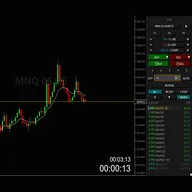
Valentin V.
Lead Quantitative Developer • Nexus Indicator • GitHub • LinkedIn
Valentin V. is the Lead Quantitative Developer at Nexus Indicator, specializing in developing high-precision tools and indicators for NinjaTrader 8. With over a decade of experience in C# and NinjaScript, he has helped hundreds of prop firm traders professionalize their execution workflows through technical discipline, systematic risk management, and automation.