Trader's Mindset
The Day Trading Ecosystem: Predators, Prey, and the Biological Cycle of Capital
Every October, more than a million wildebeest cross the Mara River in Kenya. They do not want to. The river is cold, the current is violent in places, and what waits below the surface has been there for weeks, patient, still, and completely invisible from the bank. The Nile crocodiles do not hunt on the open savanna. They do not chase. They do not need to. They learned long ago that the wildebeest will come to them. The herd crosses at the same points, in the same season, driven by the same instinct. And so the crocodiles take their positions in the water and wait.
When the herd finally reaches the bank, the pressure from behind pushes the leading animals into the water before they are ready. The ones who cross in tight clusters, who slow down in the shallows, who drift to the edges of the main crossing, those are the ones who do not reach the other side. The crocodiles are not hunting the whole herd. They are waiting for the specific conditions that make certain animals available. They expend almost no energy until the moment the geometry is exactly right.
There is no cruelty in this. No malice. No conspiracy. What you are watching is an ecosystem operating exactly as it was designed to: every participant filling a role, every predictable behavior producing a predictable result. The crocodile does not hate the wildebeest. It is simply better positioned. And the capital lost at the crossing, the animals who did not make it, does not disappear. It feeds something downstream. It transfers.
If you have ever had your stop taken out by a wick that seemed impossibly precise, only to watch price reverse and do exactly what you expected the moment you were forced out, you were not unlucky. You were the animal that crossed at the wrong point.
Most retail traders look at a chart and see candles, indicators, and entries. Professionals look at the same chart and see a living environment: areas where weak hands are likely to panic, areas where larger players can source liquidity, and areas where price is most likely to expand once weaker participants are forced out. The ecosystem analogy is not poetic decoration. It is one of the most accurate frameworks for understanding why markets move the way they do.
In nature, every organism survives by correctly reading its environment. In day trading, your account survives the same way. Misread the environment, and you become food for participants who understand it better. Read it correctly before you engage, and you stop acting like prey and start operating like a professional inside a competitive, living system.
1. Why the Ecosystem Analogy Actually Fits the Market
The usual retail framing is too shallow. People say the market is a "battle" or that trading is "you versus the market." That language misses the real mechanism. Markets are not trying to beat you personally. Markets are coordinating billions of dollars of competing intent. They need buyers, sellers, liquidity providers, speculators, hedgers, arbitrageurs, and trapped traders all interacting at the same time. That is much closer to an ecosystem than a duel.
Every ecosystem has roles. Some organisms create stability. Some consume excess. Some exploit weakness. Some survive by speed. Some survive by camouflage. Market structure works the same way. Market makers stabilize two-way flow. Institutions absorb and distribute size. High-frequency participants exploit micro-inefficiencies. Retail traders often provide the most predictable liquidity because they cluster around the same obvious highs, lows, trendlines, and stop locations.
Once you understand that, sudden reversals stop feeling random. Stop runs stop feeling personal. False breakouts stop looking like manipulation for manipulation's sake. They become what they usually are: the ecosystem reorganizing capital and liquidity so larger participants can do business.
2. Predators and Prey in Market Liquidity
In biology, predators do more than hunt. They regulate populations, prevent stagnation, and force prey species to become faster, more aware, and more adaptive. Without predators, prey overpopulate, resources get exhausted, and the entire environment degrades. Predation looks brutal at the local level, but it preserves the health of the wider system.
In the market, predators are the better-capitalized, better-informed, and better-positioned actors. That includes institutions, liquidity providers, proprietary firms, and algorithmic participants whose job is to locate flow and transact efficiently. Prey is not defined by account size alone. Prey is anyone trading in a way that is obvious, emotional, underprepared, and easy to trap.
The Market Does Not Reward Visibility
The retail crowd often exposes itself in the same places: late breakouts after extended moves, panic exits at obvious swing points, and oversized entries taken after an emotional streak. When too many traders behave the same way, they become a concentrated source of liquidity. That liquidity is attractive to stronger participants for the same reason a watering hole attracts predators in the wild: it is where vulnerable participants reliably gather.
The Lion Must Hunt
A lion does not hunt because it is evil. It hunts because it must convert opportunity into survival. Large market participants operate under the same reality. They have size to execute, inventory to manage, and returns to generate. They cannot enter and exit the market the way a small retail trader can. They need liquidity. That means they are naturally drawn toward price zones where orders are stacked and where fear or greed makes counterparties predictable.
This is why big money often appears patient before it appears aggressive. Institutions do not usually reveal intent the moment they arrive. They accumulate in balance, test liquidity, invite the crowd the wrong way, and then expand when order flow is favorable. The retail trader interprets that as "the market tricked me." The institutional trader interprets it as necessary business inside a competitive environment.
Practical Translation
If you are buying the exact breakout that thousands of underprepared traders are also buying, your setup may not be a clean momentum entry. It may be a liquidity event. The better question is not "Do I see a breakout?" It is "Who is trapped if this fails, and who needs that trapped order flow?"
3. Friction Is What Produces Intelligent Traders
There is a philosophical idea that intelligence, freedom, and capability only emerge in an environment that pushes back. An animal develops speed because something can catch it. It develops camouflage because something is looking for it. It develops timing because moving at the wrong moment has consequences. Challenge is not separate from development. Challenge creates development.
The same logic explains why so many traders stagnate. If the market were gentle, forgiving, and easy, traders would never need to improve. There would be no pressure to learn risk control, no reason to build patience, and no incentive to study how liquidity actually moves. The brutality of the market is what forces a serious trader to evolve from impulsive participation into disciplined execution.
This is where most people misread their own pain. They think losing means the market is unfair. More often, losing means the environment exposed a weakness they had not solved yet: poor entry selection, bad timing, oversizing, lack of structure, or emotional overreaction. Painful, yes. But informative. In an ecosystem, survival belongs to the organism that can absorb feedback and adapt faster than its competition.
Why Retail Traders Stay Weak
Weak traders usually fail for behavioral reasons long before they fail for analytical reasons. They chase because they fear missing out. They widen stops because they cannot emotionally accept being wrong. They revenge trade because they want psychological relief, not statistical edge. In biological terms, they keep returning to open ground at the same dangerous hour and then act surprised when they get hunted.
Professional development starts when the trader stops asking, "How do I avoid discomfort?" and starts asking, "What behavior is making me easy to read?" That shift alone changes everything. Now the task is no longer to predict every tick. It is to become less available as a source of easy liquidity.
4. The Biological Cycle of Capital
Nature wastes very little. When one organism dies, another is fed. When a forest burns, the soil is reset and new growth becomes possible. Energy changes form, but it does not simply disappear. The market has its own version of this cycle.
When you lose a trade, your money does not vanish into a void. It transfers. It moves to another participant, another balance sheet, another risk book. Sometimes it moves directly to a better-positioned trader. Sometimes it is distributed across market makers, counterparties, and fees. But the point remains: the market is constantly reallocating capital from weak stewardship to stronger stewardship.
Losses Are Not Random Destruction
This perspective matters because it strips away emotional self-pity. A stopped-out trade is not cosmic injustice. It is information. You committed capital in one direction; the environment rewarded capital positioned elsewhere. That is the cycle. Traders who can accept this become calmer, because they stop personalizing the transfer and start studying why they were on the wrong side of it.
The Market Rewards Fitness
Fitness in trading is not bravado. It is not prediction theater. It is the ability to survive long enough to compound. The fittest trader is the one who protects downside, waits for asymmetric opportunity, and adapts when conditions change. In a true ecosystem, survival always comes before expansion. That principle is exactly why rule-based tools like Nexus Chart Trader matter. They reduce the chance that one emotional burst turns your account into fuel for someone else's discipline.
5. Every Ecosystem Has Niches, and Traders Need One Too
Another reason the ecosystem metaphor works is that no species survives by being good at everything. Hawks do not hunt like wolves. Crocodiles do not move like cheetahs. Each organism thrives by exploiting a specific niche. Traders need the same clarity.
Some participants are built for fast scalps during high-volume opens. Some are better suited for patient pullbacks into higher-timeframe levels. Some specialize in news volatility. Some are best when conditions are slow and rotational. A trader who tries to operate in every regime usually becomes average in all of them and durable in none of them.
The professional question is: where is my natural edge? If you trade best when structure is clean, then your job is not to force action in chaos. If you do your best work around tested support and resistance, then use tools like Nexus Levels to define those zones in advance. If your timing improves when you can see tempo and bar completion clearly, a tool like Bar Timer Pro becomes part of your environmental awareness.
Niche selection is survival. When you trade outside your niche, you are like a desert animal dropped into a swamp. The environment is still functioning. You are simply not adapted to it.
Common Pitfall: Thinking Every Move Is Yours
Retail traders often assume they must participate in every expansion, every breakout, and every reversal. That is the prey mindset. It creates overexposure, predictable behavior, and emotional fatigue. In ecosystem terms, it is wandering into every hunting zone without a reason.
Professional Routine: Trade Like a Specialist
Professionals narrow the battlefield. They define session conditions, key levels, invalidation points, and maximum loss before they engage. They stay flat during poor conditions and become aggressive only when the environment matches their playbook.
6. Traits of the Trader Who Stops Being Hunted
If institutions are the lions and weak liquidity is the herd, the retail trader's task is not to become a lion overnight. It is to stop behaving like injured prey. Survival comes first. Strength comes later.
- Camouflage: Do not advertise your intentions by trading every obvious retail pattern at the most obvious retail location. Patience is camouflage. Cash is camouflage. Waiting through bad conditions is camouflage.
- Environmental Awareness: Read context before you read signal. Ask where liquidity is stacked, which side is trapped, whether the market is balancing or expanding, and whether the location actually favors your idea.
- Energy Conservation: Survivors do not waste energy on low-quality pursuits. In trading, that means fewer trades, better conditions, smaller size until confirmation, and zero emotional heroics.
- Swift Evasion: If the environment proves you wrong, leave. Real predators punish hesitation. So does the market. Stop-loss discipline is not optional professionalism. It is survival behavior.
- Selective Aggression: The strongest traders are not always active. They are inactive most of the time and decisive when conditions align. That is how serious capital survives long enough to compound.
7. The Real Takeaway
The ecosystem framing matters because it changes how you interpret everything the market does. A stop run is no longer an insult. It is a liquidity event. Consolidation is no longer boring. It is hidden positioning. A losing streak is no longer proof that you are cursed. It is evidence that your current behavior is not fit for the environment you are trading.
Once you accept that, you stop chasing certainty and start building adaptation. You stop trying to dominate the market and start trying to understand its food chain. You stop measuring success by how often you trade and start measuring it by how well you survive, preserve capital, and strike only when the environment actually favors you.
That is why the biological analogy does justify day trading so well. Markets are living systems of competition, feedback, scarcity, and transfer. Predators need prey. Prey forces predators to become efficient. Friction creates intelligence. Losses recycle capital. Survival belongs to the participant that reads the environment accurately and adapts without emotion. The market does not owe you safety. It rewards fitness.
Master Your Risk Before the Market Hunts It
Use Nexus Chart Trader to lock in bracket logic, hard daily loss limits, and cleaner execution rules so one emotional sequence does not turn your capital into someone else's liquidity.
Explore Nexus Chart Trader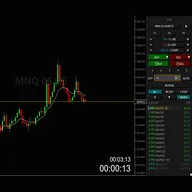
Valentin V.
Lead Quantitative Developer • Nexus Indicator • GitHub • LinkedIn
Valentin V. is the Lead Quantitative Developer at Nexus Indicator, specializing in developing high-precision tools and indicators for NinjaTrader 8. With over a decade of experience in C# and NinjaScript, he has helped hundreds of prop firm traders professionalize their execution workflows through technical discipline, systematic risk management, and automation.