Prop Firm Trading
How to Survive Your First 30 Days as a Funded Prop Firm Trader
"The challenge tested whether you could reach a target. The funded account tests whether you can sustain a business. They require completely different minds."
You passed the prop firm challenge. After weeks or months of deliberate work, calibrated risk, and disciplined execution, the eval is behind you and a funded account is in front of you. Congratulations. Now comes the part nobody prepares you for.
The first 30 days of a funded account are statistically the most dangerous period in any prop trader's career. Not because the markets are harder, but because the psychological environment has completely shifted. You are no longer chasing a profit target. You are protecting capital you have been trusted with, navigating rules that did not apply during the eval, and trying to replicate performance under conditions that feel subtly different from everything you practiced. Most traders blow their funded account not on a catastrophic day, but on a slow accumulation of small misjudgments made while still operating in challenge mode.
This guide covers the complete first 30 days: what to focus on each week, how to structure your risk, which rules trip up new funded traders most often, and how to set up your NinjaTrader 8 environment to enforce discipline automatically rather than relying on willpower alone. We will also look at the specific tools that professional funded traders use to protect their accounts and build toward a first payout without taking unnecessary risks.
The Core Shift in Mindset
During the challenge, your goal was to reach $4,000 in profit before hitting $2,000 in losses. During the funded account, your goal is to generate consistent, distributed profits that satisfy a 30-day consistency window while keeping daily losses well inside limits. These goals require structurally different strategies, not just better execution of the same approach.
Why the First 30 Days Differ from the Challenge Phase
The challenge phase is an acquisition exercise. Prop firms design challenges to be achievable while filtering out traders who cannot control risk. The funded account is an operational phase, and it introduces several dynamics that were absent during evaluation.
First, the emotional weight changes completely. During the challenge, a blown account costs you the entry fee and perhaps a few weeks of effort. During the funded account, a blown account means losing a real income opportunity, potentially a payout you were close to reaching, and the psychological cost of starting the eval process again. Many traders find that this extra weight makes them overcautious early in the session and then reckless later in the day as they try to recoup losses they never should have taken.
Second, the consistency rules that govern payouts are entirely different from the single profit target of the challenge. Most prop firms now apply some form of consistency rule at payout time, whether it is Apex's 30% single-day maximum, or firms that require a minimum number of profitable trading days before disbursement. A trader who made $3,000 in two enormous sessions but was flat or losing on the other twelve trading days may find that payout is blocked until the ratio improves. Understanding these rules from day one shapes how you size trades and how you manage winning sessions.
Third, the psychological relationship with profit is different. During the challenge, paper profits had no real weight. During the funded account, as your balance grows toward a payout threshold, the temptation to protect those gains by stopping early or to accelerate them by increasing size becomes significant. Both impulses are dangerous at the wrong moment.
Week One: Calibration Week
The first week of a funded account is not a trading week. It is a calibration week. The objective is to gather data about how the funded environment feels, to test your execution workflow at reduced size, and to identify any friction points in your setup before the stakes are meaningful.
Start at 50% of your normal challenge position size. If you traded two contracts during the eval, trade one during week one. If you traded four, trade two. The reduction in size will feel uncomfortable if you have been running aggressively during the challenge, but it serves a specific purpose: it gives you room to make mistakes while learning the funded account's rhythm without those mistakes costing you meaningful dollars.
What you are testing during week one:
- Does your pre-market routine still work in this environment?
- Are your stop distances appropriate for current market volatility?
- How does your daily loss limit feel relative to the account's max drawdown rule?
- Is your session timing aligned with the periods of genuine opportunity?
- Are your risk locks configured correctly in your trading software?
This is also the week to set up your risk management infrastructure properly. If you are using Nexus Chart Trader on NinjaTrader 8, configure your daily loss limit and profit target locks before you trade a single session. The tamper-proof daily risk locks in Nexus Chart Trader persist across platform restarts, meaning there is no way to accidentally or deliberately bypass them by closing and reopening the software. Set these numbers based on the funded account's drawdown rules, not based on what you think you can recover from in a single session.
A practical configuration for week one on a typical $50,000 funded account with a $2,000 daily loss limit might be:
- Daily loss lock: $400 (20% of the firm's daily limit, giving you 5 bad days before you are in any real danger)
- Profit target lock: $600 (take the win, stop trading when you hit it)
- Session end time: set to automatically flatten 15 minutes before your firm's daily cutoff
These conservative numbers will feel frustrating on good days. That is exactly the point. You are building a baseline, not optimizing performance. The goal of week one is to complete the week with a positive or flat P&L and a clear understanding of your environment.
Common Week One Mistake
Trading at full challenge size from day one because "I know what I'm doing." The funded environment is different from the eval. Volatility conditions, your emotional state, and the weight of real income all shift your execution. Give yourself calibration room before scaling back up.
Professional Week One Routine
Half size. Tight daily loss limit. Full pre-market routine. Log every trade with emotional state and market context. End the session when either the profit target or loss limit is hit, regardless of what the market is doing.
Setting Up NinjaTrader 8 for Funded Account Protection
Your NinjaTrader 8 configuration should be doing the hard work of protecting your account automatically, not relying on your in-session discipline to override the impulse to revenge trade after a loss or add size during a winning streak. The best funded traders treat their platform configuration as a non-negotiable part of their process, set once at the start of the funded account and adjusted only during non-trading hours after deliberate review.
The most critical element of any funded account setup is a tamper-proof daily loss limit. In the funded account context, this means a loss limit that cannot be circumvented by restarting the platform, changing the instrument, or switching accounts. Nexus Chart Trader's daily risk lock system is designed specifically for this requirement. Once the daily maximum loss is hit, the account is locked for the session regardless of what actions you take inside NinjaTrader. This is not just convenient, it is structurally important. In the heat of a losing session, the rational mind goes offline. Knowing that the software will stop you removes one dangerous degree of freedom from the equation.
Beyond the loss lock, configure your news lock system before every session. High-impact economic releases are the single most common cause of sudden, unexpectedly large losses in futures trading. The liquidity vacuum that typically forms 30 to 60 seconds before a major number like CPI, NFP, or FOMC decisions creates slippage conditions that bear no relationship to normal market execution. Nexus Chart Trader's news lock automatically tracks the economic calendar and flattens all positions and cancels pending orders before configurable high-impact events. You do not need to watch a separate calendar tab during your session or try to remember which releases are at which times. The system handles it.
For market structure context, Nexus Levels running on your primary chart gives you automatic identification of the key swing highs and lows that define the current directional bias. During the funded account phase, trading with clear structure context reduces the likelihood of taking entries at precisely the wrong location, a pattern that appears constantly in the trade logs of blown funded accounts. The automatic labeling of Higher Highs, Lower Lows, Higher Lows, and Lower Highs provides an objective framework for directional bias that does not depend on your read of the chart in any given moment.
Volume context is equally important for filtering which entries are worth taking. Nexus Volume's spike detection identifies moments when volume is meaningfully above its recent average, which frequently coincides with genuine institutional participation in a move rather than low-conviction retail noise. During the funded account phase, where every loss compounds against your drawdown limit, filtering out low-quality setups with weak volume support is a straightforward way to improve the quality of your trade log without requiring any change to your underlying strategy.
Week Two: Building the Daily Process
By the start of week two, you have a week of funded account data in your trading journal and a baseline sense of how the environment feels. Week two is about converting that baseline into a repeatable daily process.
A funded account daily process has three components: the pre-session setup, the active trading session, and the post-session review. All three matter for long-term performance, but most traders focus entirely on the active session and neglect the other two.
The pre-session setup should be completed before the market opens. This means reviewing the prior day's trading levels, identifying the key overnight range and any significant gaps, noting the economic calendar for the day, and confirming that all risk parameters are correctly configured in your execution software. A structured pre-market routine condenses all of this into a repeatable framework that takes 20 to 30 minutes and eliminates the reactive, context-free entries that frequently appear in early funded account losses.
During the active session, your job is to execute your system with fidelity. This is harder than it sounds in the funded account phase because the emotional environment is different from what you practiced. Two techniques help. First, give yourself a specific trade count limit for the session, typically three to five maximum. This prevents the overtrading pattern that almost universally appears in week two of funded accounts, where traders who had a planned two-trade session end up taking ten trades by 11am after a frustrating start. Second, use the bar countdown on Nexus Bar Timer to enforce patience between setups. Knowing exactly how much time is left in the current candle before it closes prevents the impulsive entry on a candle that is still forming, which is a consistent source of bad timing in the funded account phase.
The post-session review is where the compound improvement happens. After every trading session, open your Nexus Trading Journal and review your trade log for the day. The key questions are:
- Did I enter at the locations I planned, or did I enter reactively?
- What was the market structure context at the time of each entry?
- Were my stops placed at logical invalidation points or were they sized to hit a round-dollar risk number?
- Did I exit trades according to my system rules or did I exit early because of anxiety?
- If I had a losing session, was the loss the result of poor execution or a poor day for my edge?
The equity curve and calendar heat map in the Nexus Trading Journal give you an immediate visual answer to the consistency question. If your calendar shows clusters of green days followed by red days that wipe out multiple sessions of progress, you have a drawdown control problem rather than an edge problem. If your green days and red days are roughly random in their distribution but your average winner is larger than your average loser, you have a working edge and an execution problem. These two diagnoses require completely different interventions.
Tracking What Actually Matters
Most funded traders track total P&L and nothing else. The metrics that predict long-term funded account survival are win rate by session time, maximum adverse excursion per trade (how far against you did winning trades go before turning), and average winner versus average loser. If your winners are consistently 50% larger than your losers, a 45% win rate is profitable. If they are equal size, you need a 55% win rate. Know your numbers.
Understanding and Respecting Consistency Rules
By week two, you should have a clear written understanding of every payout rule your prop firm applies. The rules that kill new funded traders are almost never the obvious ones like the daily loss limit. They are the secondary rules around payout qualification that nobody reads carefully until they are blocked from their first disbursement.
The most commonly misunderstood rule in 2026 is the single-day profit cap. Several major prop firms, including Apex, apply a rule stating that no single trading day can account for more than 30% of your total profits at payout time. If you make $2,000 on a single breakout day and then grind your way to $1,000 over the following two weeks, your $3,000 total profit will not qualify for payout because 67% of it came from a single session. You need to either continue trading until that single-day percentage drops below 30%, or you need to retrace back to a qualifying balance. Understanding your firm's consistency rules before your first high-performance day prevents the frustration of earning money that you cannot access.
The practical implication of consistency rules for position sizing is significant. A trader who understands the 30% rule will deliberately limit their best days rather than allowing a single session to dominate their record. If you are up $800 in the first two hours and your target for the full 30-day payout cycle is $3,000, reaching $900 on that single day (30% of $3,000) is the ceiling, not the floor. The correct move is to stop trading that session and bank the win, rather than running through a full day of exposure trying to extract every dollar the market will give. This is counterintuitive for traders who are used to letting winners run, but it is the correct execution for the funded account objective.
If your firm applies trailing drawdown rather than static drawdown, a different set of considerations applies. Trailing drawdown mechanics mean that your actual loss buffer shrinks as your account grows, and understanding your real available buffer at any point in the session is essential for calibrating your daily risk limits correctly.
Week Three: Finding Your Edge Under Funded Conditions
Week three is when the novelty of the funded account wears off and you start to see your actual performance profile clearly. The post-session review data from weeks one and two now gives you enough trades to identify patterns. Look for the following signals in your trade log:
Time-of-day performance. Most retail futures traders perform significantly better during the opening 90 minutes of the cash session (9:30am to 11:00am Eastern) and again during the afternoon session (1:30pm to 3:00pm). The midday period from 11:30am to 1:00pm is frequently characterized by lower volume, choppy price action, and false breakouts that eat into accounts that are still active during those hours. If your trade log shows consistent losses in a particular time window, the correct response is to remove that window from your trading schedule entirely. Nexus Chart Trader's session scheduling allows you to define strict start and end times with automatic flattening at the session boundary, which removes the temptation to stay in trades past your high-performance window.
Instrument-specific performance. Some funded traders discover in week three that their edge is significantly stronger on one instrument than another. A trader who is profitable on NQ but marginal on ES, or strong on CL but weak on GC, should concentrate their funded account exposure on their best instrument. The temptation to diversify across multiple instruments in the funded account phase is a distraction. Your job is to protect the account and generate consistent payout-qualifying profits, not to build a diversified futures portfolio.
Setup-specific performance. Review which entry setups from your strategy are actually working in the current market environment. A setup that worked well in the trending conditions of the challenge phase may underperform in a choppy, mean-reverting funded account period. The Nexus Trading Journal's analytics tab gives you trade-by-trade breakdown that allows this kind of granular review. If a specific setup is losing money over 15 or more occurrences, it is not working in the current environment and should be benched until conditions change.
By end of week three, most traders who are going to survive the funded account have found a repeatable rhythm. They know which hours they trade, which setups they take, and what their daily loss and profit limits are. The session has become operational rather than exploratory. This is the correct transition.
The Role of Market Structure in Funded Account Execution
One of the patterns that appears consistently in losing funded account sessions is entries taken without clear structural context. A trader who enters long because a candle looks bullish, without checking whether that candle is occurring at a higher high that represents a liquidity pool or at a higher low that represents a genuine structural continuation point, is making an incomplete decision. In the challenge phase, incomplete decisions are sometimes rescued by a profit target that happens to be hit before the position turns. In the funded account phase, where position sizes may be larger and the emotional weight of losses is higher, incomplete decisions compound into losing streaks.
Nexus Levels addresses this by giving you an objective, automatically updated map of every significant swing high and low on your chart, with clear labeling of the current structure. Higher Highs and Higher Lows define an uptrend and give you structural permission to look for long entries on pullbacks. Lower Lows and Lower Highs define a downtrend and require short bias for continuation setups. When the current market structure is ambiguous or mixed, the correct response is to reduce size or wait for clarity rather than forcing a trade with conflicting signals.
The unbroken levels tracking in Nexus Levels is particularly useful for identifying where institutional orders are likely to be resting. Price levels that have not been tested since their creation represent accumulated unfilled orders from participants who entered at those prices and have been managing positions since. When price returns to those levels, the subsequent reaction often provides a high-quality entry or exit opportunity. Using these levels as targets for existing trades and as decision points for new entries is a structural improvement to any funded account execution plan.
Week Four: Payout Setup and Protecting Gains
If you have reached week four with a positive balance and a trade log that shows consistent, distributed profits, you are approaching payout territory. This is simultaneously the most rewarding and the most dangerous period of the first funded month.
The most common mistake in week four is increasing position size as the payout target comes into view. The reasoning sounds rational: "I'm close, I want to get there faster." The execution is almost always destructive. The traders we have seen blow funded accounts in week four almost universally shared one characteristic: they increased size precisely when their emotional state was already elevated by proximity to a real financial milestone. Elevated emotional state plus increased position size plus high-stakes outcome is a combination that reliably produces poor decisions.
The correct week four posture is the opposite: maintain or slightly reduce position size, tighten your daily loss limit, and increase the frequency of your mid-session break evaluations. If you are within striking distance of a payout target, preserve what you have built. One bad week four cannot un-earn a month of careful work, but it can reset your payout timeline by two to three weeks.
Configure your Profit Protector settings in Nexus Chart Trader before every week four session. The Profit Protector system automatically flattens your account if your intraday profit falls below a configurable threshold after reaching a peak. If you start a session and quickly reach $400 in profit, the Profit Protector can be set to flatten everything and lock trading if the account retreats to $200. This prevents the scenario where a great morning turns into a losing day through the incremental erosion of giving profits back trade by trade.
Week Four Trap
Increasing size to reach the payout target faster. This almost always ends in a significant drawdown exactly when you can least afford it. The payout milestone is not a reason to take more risk. It is a reason to take less.
Week Four Discipline
Tighten daily loss limit to 60% of normal. Enable Profit Protector on every session. Stop trading at 80% of your usual profit target. Preserve the payout qualification, not the individual session performance.
The End-of-Day Review: Where Compound Improvement Happens
No funded account framework is complete without a structured end-of-day review process. This is not an optional step for traders who feel like doing it after a good session. It is a mandatory part of the funded account business operation, run after every session regardless of outcome.
An effective end-of-day review takes 15 to 20 minutes and covers three questions. First, was today's performance consistent with my edge? If you took a loss, was it a well-executed trade that simply did not work, or was it a deviation from your system? Second, what does today's session add to my performance picture? Pull up the weekly and monthly view in your trading journal and check whether your metrics are moving in the right direction. Third, what is the one change I need to make tomorrow? Not ten changes, not a complete strategy overhaul. One specific, executable adjustment.
The equity curve view in Nexus Trading Journal gives you an immediate visual answer to the trend question. An equity curve that is generally rising with normal fluctuation indicates a working system. An equity curve that is flat with increasing drawdown periods indicates that your losing trades are getting larger while your winners are staying the same, a volatility-expansion problem that often resolves by tightening stops. An equity curve that shows frequent sharp drops followed by slow recovery indicates that you are taking losses in large batches, which is typically a consequence of overtrading on bad sessions rather than a fundamental edge problem.
Six Rules That Professional Funded Traders Never Break
Across funded accounts at different firms and different asset classes, the traders who consistently reach payout and maintain funded accounts over multiple cycles share a small set of non-negotiable operational rules. These are not motivational principles. They are structural decisions that have been refined through real financial consequence.
- Never trade the first 5 minutes of the cash open without a pre-defined plan. The opening minutes of the futures session frequently exhibit extreme directional moves that reverse completely within 15 to 30 minutes. Trading this period reactively, without a specific plan based on pre-market context, is gambling rather than execution. If you do not have a clear read of the opening setup before the bell, do not trade until the first 5-minute candle closes.
- Never add to a losing position. Adding size to a losing trade in a funded account is almost always a financed revenge trade disguised as a scale-in strategy. The funded account has a fixed drawdown limit. Adding to losses accelerates the approach to that limit. Every dollar of loss is a dollar of buffer you cannot recover. Take the loss. Move on.
- Stop trading after two consecutive losses in a session. Two consecutive losses is a signal that either your edge is not present in today's conditions, or your emotional state has deteriorated enough to compromise your execution quality. Either way, the correct response is to stop. Resume tomorrow with a clear head, not in the same session with impaired judgment.
- Never trade through high-impact news without a specific plan. The economic calendar is available 24 hours in advance. There is no excuse for being caught in an open position during a major release. Either flatten before the event and re-enter after the initial reaction, or do not trade that period at all. The Nexus Chart Trader news lock makes this effortless by automating the flatten and re-entry window.
- Never override a risk lock. If your daily loss limit is hit, accept the loss and close the platform. The traders who restart NinjaTrader, switch accounts, or find other ways around their risk locks after hitting their limit are the traders who turn a manageable losing day into an account-threatening event. The lock is not a suggestion. It is the most important rule your system has.
- Review your trade log before increasing size. Any position size increase during the funded account phase should be justified by three consecutive profitable weeks in your trade journal, not by a single good day or a feeling of confidence. Confidence is not a trading edge. Verified statistical performance is.
Lived Experience: What Actually Changes When the Account Is Funded
Having worked with funded traders across multiple prop firm structures, the single most consistent observation is this: the traders who struggled with challenge after challenge and then stabilized immediately once funded are not a common pattern. The traders who passed challenges comfortably and then struggled with the funded account are far more common than anyone in the industry talks about openly.
The change that most frequently catches traders off guard is the mandatory loss cooldown period. During the challenge, if you had a bad trade, you could immediately enter another position to recover. During a funded account managed with professional discipline, whether through a firm's explicit rules or through your own configured cooldown periods in your trading software, the impulse to immediately re-enter after a loss has to wait. That waiting period, which might be 30 minutes or the rest of the session, is where most traders reveal whether they have genuine process discipline or just evaluation-phase control.
We have also observed that traders who run multiple funded accounts simultaneously, a common rotation strategy in 2026, benefit significantly from a trade copier during the funded phase. Nexus Copier allows a master account to synchronize positions to up to three follower accounts, which means the execution analysis, stop placement, and entry timing only happens once. All follower accounts mirror the same decision. This eliminates the cognitive load of trying to execute multiple account sessions simultaneously while still maintaining the evaluation performance of each funded account independently. For traders managing two or three funded accounts, this workflow change is material to both performance and stress levels.
Building Toward Your Second Month
If you complete 30 days with a positive balance, a qualifying payout record, and a trade journal that shows your edge operating consistently, you have done more than survive your first funded month. You have built a repeatable operational framework that most traders who enter the prop firm ecosystem never develop.
The transition into month two should be incremental rather than aggressive. Do not immediately scale to maximum allowed position size because you survived month one. Instead, add one contract of size and run a second month of evidence collection before deciding whether the additional size is appropriate for your drawdown profile. The funded account is a long-term business. The traders who treat it that way compound their performance over quarters, not over single sessions.
The most powerful thing you can do at the end of month one is write down exactly what you did right. Not what you want to improve, not what went wrong, but specifically the habits and decisions that produced positive results. Those are the behaviors to protect in month two, not the aggressive additions that feel natural when confidence is high. Protect the process that worked. Scale it carefully. Measure every change.
Frequently Asked Questions
What is the biggest mistake new funded prop firm traders make?
Treating the funded account exactly like the challenge. The challenge rewards aggressive pursuit of a profit target. The funded account rewards sustainability and consistency. Traders who do not reset their risk sizing and session structure after getting funded often blow the account within the first two weeks, frequently on a single oversized trade that would have been acceptable in the challenge context but wipes out weeks of funded progress.
How much should I risk per trade on a new funded account?
Most professional funded traders start at 25 to 50% of their maximum challenge risk during the first two weeks. If you risked $500 per trade during the challenge, start the funded account at $125 to $250. The reasoning is straightforward: the funded environment is unfamiliar. Slippage, session timing, and emotional response to real payouts are all different from what you experienced during the eval. Give yourself room to recalibrate without damaging your account in the process.
How do daily loss limits work on funded prop firm accounts?
Most prop firms enforce a daily loss limit, typically between 2 and 4% of the account balance. Hitting this limit usually locks trading for the rest of the day and, with some firms, can affect your standing. Tools like Nexus Chart Trader enforce tamper-proof daily risk locks that automatically flatten all positions and block new entries once your configured limit is hit, preventing the cascade of revenge trades that most blown accounts share as their common cause.
What is the 30% consistency rule and does it apply to my funded account?
Some prop firms, including Apex, apply a consistency rule stating that no single trading day should account for more than 30% of your total profits at payout time. If you make $3,000 total and $1,200 came from a single day, you may not qualify for payout until the ratio improves. This rule means front-loading risk on a handful of big days is a trap. Sustainable, distributed profits across multiple days is the correct structural approach to funded account management.
What should I track in a trading journal during my funded account phase?
Track entry and exit prices, position size, session time, market context at entry, and your emotional state. Beyond raw P&L, the most valuable metrics are win rate by session time, average winner versus average loser, and maximum adverse excursion per trade. The Nexus Trading Journal captures all of this automatically and surfaces it through an equity curve and calendar heat map that makes the performance picture immediately readable.
How do I protect a profitable week heading into Friday?
Cut your daily loss limit to 50% of its normal level for the final trading day of the week. If you normally allow a $500 daily drawdown, set it to $250 on Friday. This prevents a single bad trade from erasing a week of careful progress. Additionally, avoid trading the 30 minutes before and after major economic releases on Friday, since liquidity drops sharply during news events and spreads can widen unpredictably.
Protect Your Funded Account from Day One
Nexus Chart Trader gives you tamper-proof daily risk locks, automatic news lock protection, Profit Protector, and session scheduling built specifically for NinjaTrader 8 prop firm traders. Set your limits once and let the system enforce them.
Explore Nexus Chart Trader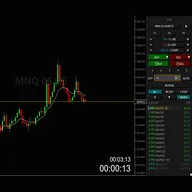
Valentin V.
Lead Quantitative Developer • Nexus Indicator • GitHub • LinkedIn
Valentin V. is the Lead Quantitative Developer at Nexus Indicator, specializing in developing high-precision tools and indicators for NinjaTrader 8. With over a decade of experience in C# and NinjaScript, he has helped hundreds of prop firm traders professionalize their execution workflows through technical discipline, systematic risk management, and automation.