Execution and Risk Management
The Multi-Timeframe Stochastic Scalping Strategy: How to Trade Momentum and Flags in Futures Markets
"Aligning short-term momentum triggers with long-term order flow turns noise into structure, converting market rotations into high-probability execution pathways."
Intraday momentum is both the scalper's greatest edge and their most dangerous trap. In fast-moving futures markets, retail traders often find themselves chasing rapid price expansions, entering right as momentum exhausts, only to be stopped out on the subsequent rotation. This cycle of drawdowns is rarely caused by a lack of indicators, but rather by a failure to align momentum across multiple timeframes.
To trade momentum successfully, you must have a systematic way to view the market's pulse. This article introduces the Multi-Timeframe Stochastic Scalping Strategy, an institutional-grade framework that uses nested stochastics on a single execution chart to isolate high-probability reversals and trend-following flag setups. By combining quad-stochastic rotations, strict structural channel mapping, and precise momentum indicators, you can transition from speculative trading to systematic market execution.
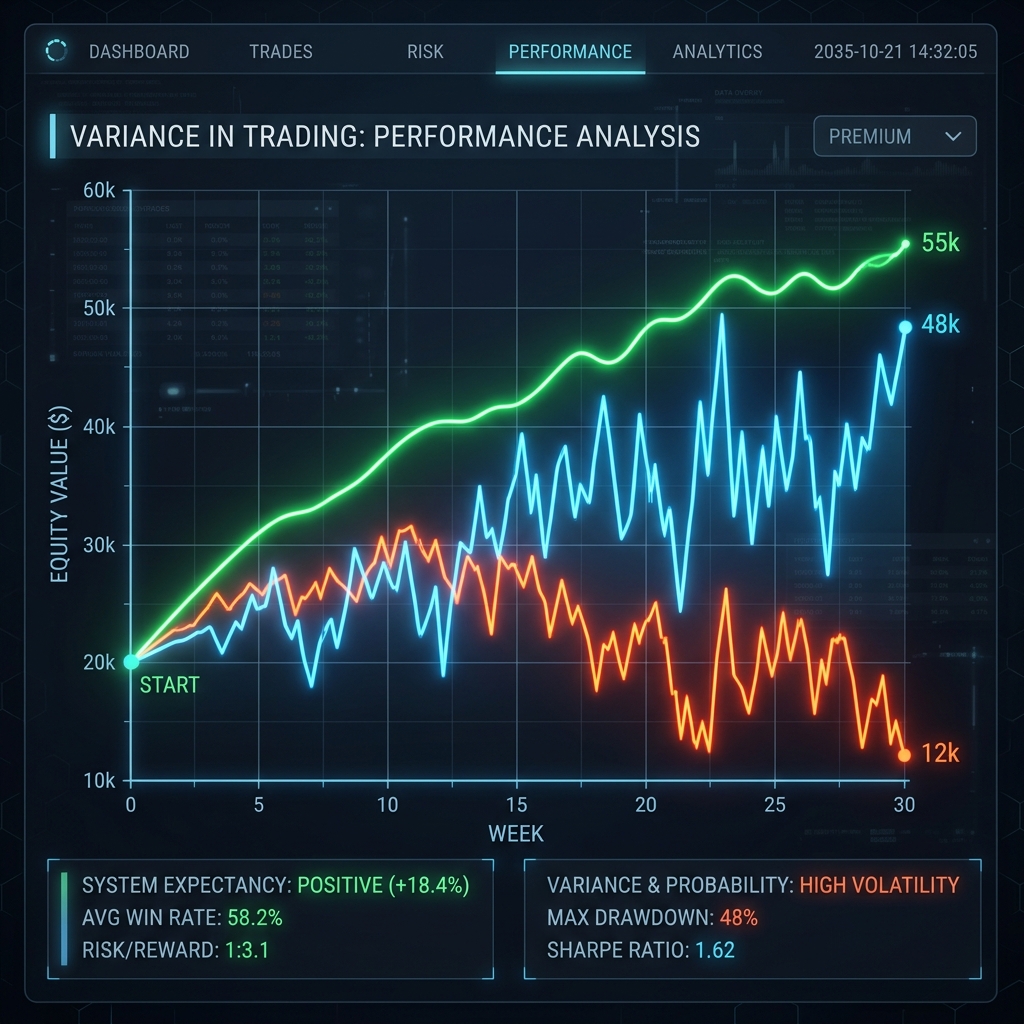
1. The Multi-Timeframe Stochastic Engine
The foundation of this strategy relies on nesting multiple timeframes onto a single execution chart. Rather than constantly switching between a one-minute, three-minute, and five-minute chart, which increases cognitive load and slows execution speed, we overlay four distinct stochastic parameters on a one-minute chart.
Each of these stochastics represents momentum across different speeds:
- The 9, 3, 1 Stochastic: This is the fastest indicator, tracking short-term momentum on the one-minute execution chart.
- The 14, 3, 1 Stochastic: This represents the classic momentum parameter developed by George Lane, acting as a medium-term filter.
- The 44, 3, 1 Stochastic: This bridges the gap, tracking intermediate momentum equivalent to a three-minute chart.
- The 60, 10, 1 Stochastic: This is the slowest indicator, representing long-term momentum equivalent to a five-minute chart.
For all four parameters, the third value, K smoothing, is set to one. This configuration ensures that we utilize fast stochastic formulas rather than heavily smoothed slow stochastics, eliminating unnecessary lag and allowing the lines to react dynamically to real-time order flow.
Key Takeaway: Momentum Precedes Price
The stochastic oscillator does not measure overbought or oversold extremes in the traditional sense, but rather the rate of change of momentum. Like a rocket engine cutting off before the spacecraft reaches its apex, momentum decelerates before price actually reverses, creating visible divergence patterns on the oscillator before they appear on the price chart.
2. The Quad Rotation Reversal Setup
A quad rotation occurs when all four stochastic oscillators simultaneously align in an overextended state. Under this framework, we define our trading environment based on the 20 and 80 boundaries on the stochastic panel:
- Oversold Trading Environment: All four stochastics (9, 3, 1; 14, 3, 1; 44, 3, 1; and 60, 10, 1) are trading below the 20 line.
- Overbought Trading Environment: All four stochastics are trading above the 80 line.
Once all four bands enter this zone, you have half of a high-probability reversal signal. However, a quad rotation alone is not a trigger. In a strong trend, oscillators can remain overextended for long periods. To execute a trade, you must wait for a divergence to confirm that momentum is shifting.
The Reversal Trigger: Bullish Divergence
To execute a long position during an oversold quad rotation, apply the following steps:
- Identify the First Low: Price sells off, and all four stochastics drop below the 20 line.
- Monitor the Bounces: Price bounces slightly, pulling the fast 9, 3, 1 stochastic back above the 20 line.
- Wait for the Retest: Price rotates back down to test the previous low.
- Verify the Candle Bodies: Look strictly at the lows of the candle bodies. Wicks do not matter. The second low must have candle bodies that are equal to or slightly lower than the first low's bodies.
- Confirm the Divergence: While price body lows are equal or lower, the 9, 3, 1 stochastic must print a higher low that remains above the 20 line.
- Execute the Entry: Enter long on the close of the candle where the 9, 3, 1 stochastic turns back upward.
- Set the Stop Loss: Place your stop loss one tick below the lowest wick tail of the double-bottom pattern.
- Manage the Exit: Exit the trade immediately when the fast 9, 3, 1 stochastic reaches the 80 line. Do not wait for a target on the chart. Take what the momentum gives you. This typically results in a hold time of one to five minutes.
"Professional scalping is not about capturing the entire trend. It is about identifying a high-probability structural pocket, executing with a tight stop, and taking profits immediately when the momentum indicator reaches the opposite boundary."
How To Apply This: Reversal Example
Imagine E-mini S&P 500 (ES) futures are selling off in the morning. Price hits a low of 5,120. At this point, the 9, 3, 1; 14, 3, 1; 44, 3, 1; and 60, 10, 1 stochastics are all pinned below 20. Price bounces to 5,124, pushing the 9, 3, 1 stochastic up to 45. Price then rolls back down, printing candle bodies at 5,119.50, slightly lower than the first low. However, the 9, 3, 1 stochastic only drops to 28, forming a clear higher low. As the trigger candle closes, enter long at 5,121. Place the stop loss at 5,118.50 (one tick below the low tail at 5,118.75). When the 9, 3, 1 stochastic reaches the 80 line, exit the trade immediately, securing a clean, low-stress profit.
3. The 20-20 Trend-Following Flag Strategy
Divergences are designed for markets that are reversing. However, when a market enters a strong trending state, trying to trade counter-trend reversals will result in consecutive losses. In a trending market, you must transition to a trend-continuation strategy. This is where the 20-20 Flag Strategy applies.
The strategy is named after the relationship between the 20-period moving average and the 20 line of the stochastic oscillator.
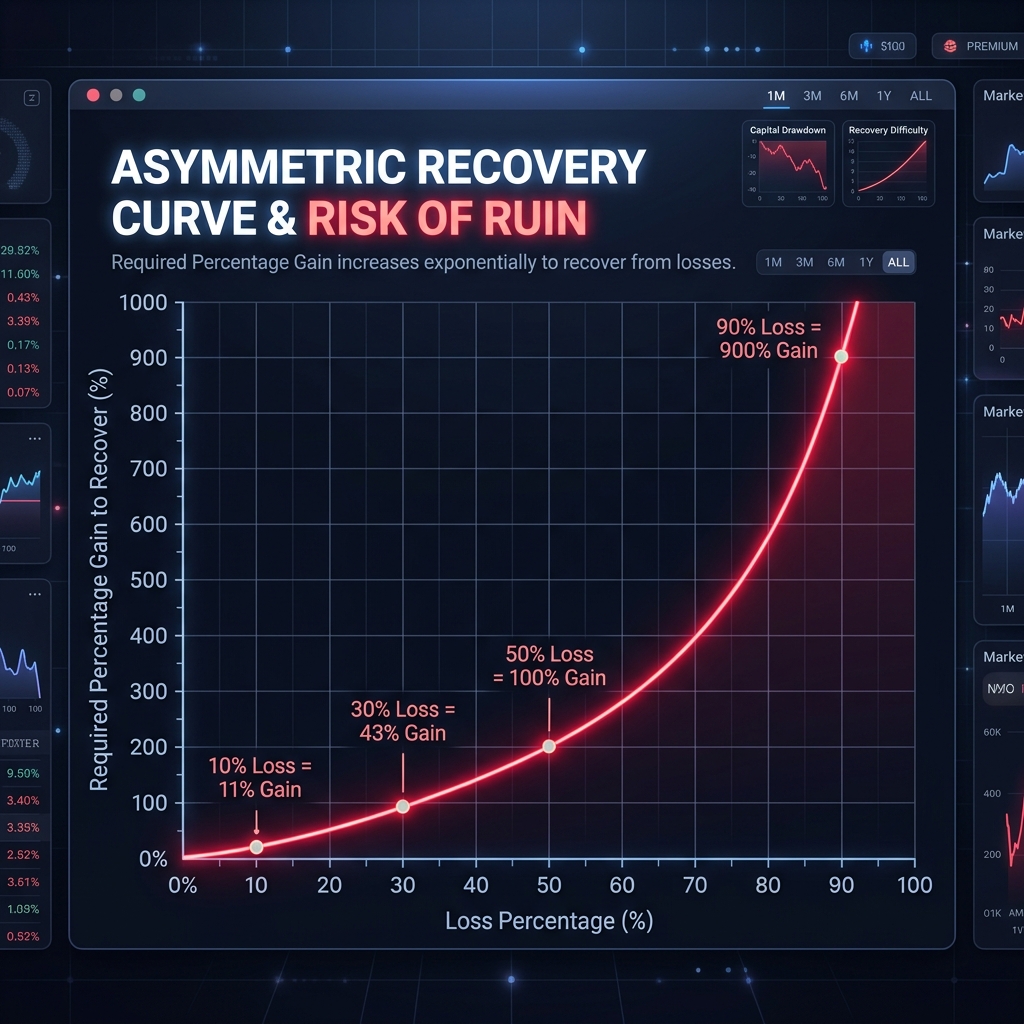
The 20-20 Bull Flag Strategy
To execute a long position during a strong uptrend:
- Filter the Trend: Price must be trading above both the 20-period exponential moving average (EMA) and the 200-period simple moving average (SMA) or volume-weighted average price (VWAP).
- Confirm Embedded Momentum: The slow 60, 10, 1 stochastic must be embedded, meaning it is pinned flat above the 80 line (ideally above 85 or 90) for at least three consecutive candles. This proves that higher-timeframe momentum is aggressively bullish.
- Wait for the Pullback: The fast 9, 3, 1 stochastic must pull back all the way down to touch or cross below the 20 line.
- Execute the Entry: Enter long as the 9, 3, 1 stochastic dips into the 20 line and price tests the rising 20-period EMA.
- Set the Stop Loss: Place your stop loss a few ticks below the 20-period EMA or the recent pullback low.
- Manage the Exit: Exit the trade when the 9, 3, 1 stochastic rotates back up to the 80 line.
The 20-20 Bear Flag Strategy
To execute a short position during a strong downtrend:
- Filter the Trend: Price must be trading below both the 20-period EMA and the 200-period SMA or VWAP.
- Confirm Embedded Momentum: The slow 60, 10, 1 stochastic must be embedded, pinned flat below the 20 line for at least three consecutive candles.
- Wait for the Pullback: The fast 9, 3, 1 stochastic must pull back (rally) up to touch or cross above the 80 line.
- Execute the Entry: Enter short as the 9, 3, 1 stochastic dips into the 80 line and price tests the falling 20-period EMA.
- Set the Stop Loss: Place your stop loss a few ticks above the 20-period EMA or the recent pullback high.
- Manage the Exit: Exit the trade when the 9, 3, 1 stochastic rotates back down to the 20 line.
Key Takeaway: Embedded Stochastics
An embedded slow stochastic (60, 10, 1) indicates that price is in a runaway trend. Under these conditions, the standard rule of selling when an oscillator becomes overbought is completely invalidated. The embedded state means momentum is locked in, and any minor pullback on the fast oscillator (9, 3, 1) is a high-probability buying opportunity.
4. Advanced Mapping: Channel Width Identification
To maximize the probability of success, your trades should always align with structural channel lines. Traditionally, traders use the one-two-three channel mapping method, which requires connecting two pivot points on one side of a trend, cloning the line, and placing it on the opposing pivot on the other side.
However, you can use an advanced method to map a parallel channel before the third pivot even forms:
- Identify a Divergence: Pinpoint the divergence setup, such as a high and a higher high on price, corresponding to a high and a lower high on the stochastic indicator.
- Locate the Pullback Low: Find the lowest point on the price chart between the two divergence highs.
- Measure the Width: Measure the vertical distance (height) between the first pullback low and the peak of the divergence high. This vertical distance represents the width of the new channel.
- Draw the Trendline: Draw a trendline using the angle of the divergence highs (which typically prints between 25 and 35 degrees).
- Project the Channel: Project the parallel channel boundaries using the identified width.
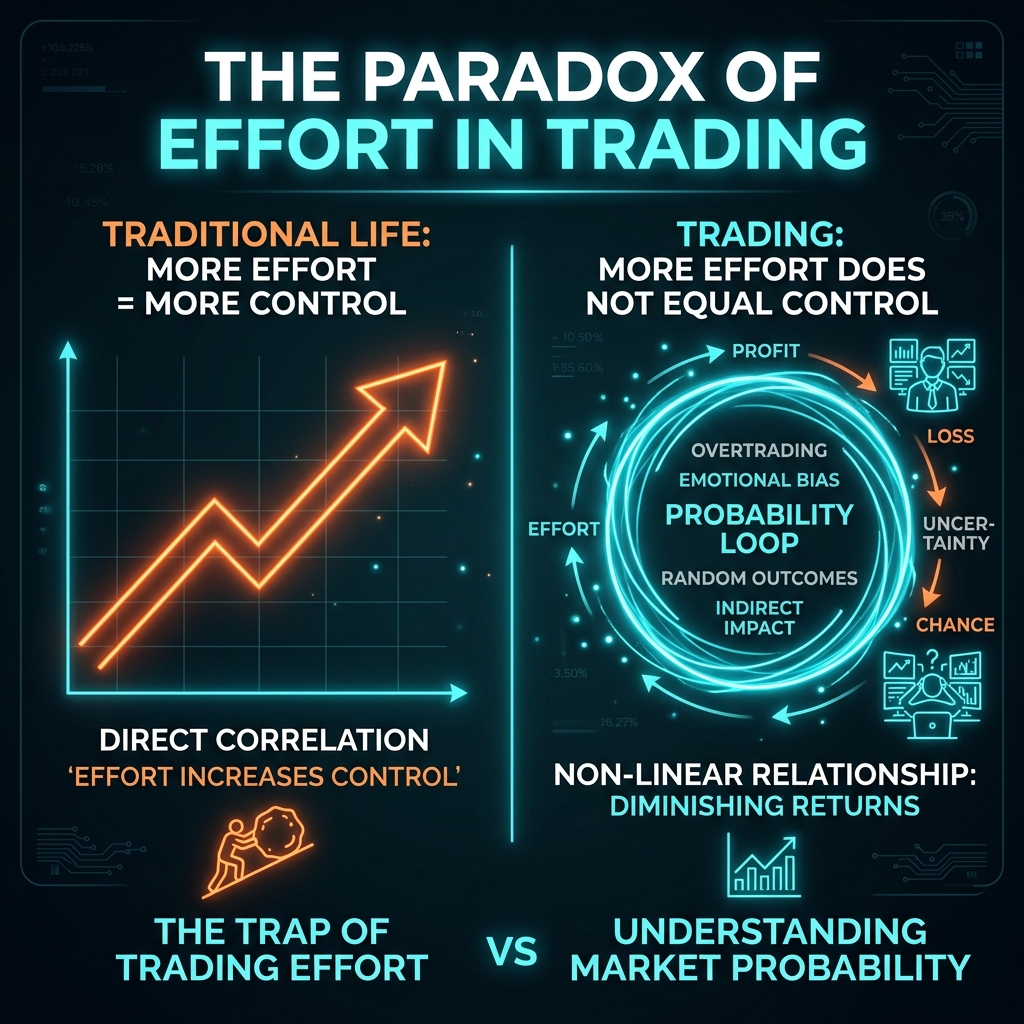
"Algorithms do not trade random prices, they trade geometric lines. By identifying the channel width at the moment a divergence confirms, you map the path of least resistance before the rest of the market reacts."
5. Designing Your Life Around Trading
The biggest obstacle to success with this strategy is not the technical setup, but the discipline required to execute it. The quad rotation divergence is a highly reliable setup, but it may only form five to seven times a day on a given instrument.
Many retail traders fail because they try to trade around their daily routines, opening their laptops during a random lunch hour and forcing trades when no structural setups are present. To trade like a professional, you must design your life around the market. This means dedicating specific blocks of time to sit in front of the charts, maintaining absolute focus, and waiting patiently for the stochastics to align. If the setup does not print, do not trade. Treat your execution platform as a systematic business operation.
Recommended Tool: Nexus Chart Trader
Automating your execution variables is essential when scalping fast-moving markets like Nasdaq (NQ) or E-mini (ES) futures. With **Nexus Chart Trader**, you can configure your stop loss and take-profit parameters beforehand. When a stochastic rotation signals an exit, you can execute order adjustments with a single click, eliminating the latency of manual typing and protecting your execution from slippage.
Tools That Can Help You Apply These Concepts
To implement this multi-timeframe strategy systematically, you need to transition from discretionary setups to a structured trading environment. The following professional tools for NinjaTrader 8 are designed to support this workflow:
- Nexus Chart Trader: Enforces mechanical execution. It features automated target brackets, dynamic risk controls, and automated loss cooldowns to keep you disciplined during fast market rotations.
- Nexus Trading Journal: Captures your trade data. It logs your stochastic setups, tags emotional errors, and analyzes your performance metrics, transforming abstract trades into statistical data.
- Nexus Copier (Free & Pro): Replicates your trades across multiple accounts. If you are managing multiple evaluation or funded accounts, the copier synchronizes your execution with minimal latency, eliminating the cognitive overhead of managing multiple terminals.
- Nexus Data Downloader: Downloads historical market data. It allows you to fetch tick-by-tick data to backtest your stochastic parameters in market replay, building statistical confidence before risking live capital.
Conclusion: Mechanical Execution
The Multi-Timeframe Stochastic Scalping Strategy provides a disciplined framework for active futures traders. By nesting multiple stochastic oscillators, you ensure that your executions on the one-minute chart are fully backed by higher-timeframe momentum. Enforce strict channel mapping, wait patiently for the stochastics to align, and utilize automated execution tools to remove emotion from the equation. Treat your trading as a business, stick to the rules, and let the mathematical edge build your account.
Master Your Momentum Execution
Build a systematic trading command center. Enforce automated target brackets, tamper-proof daily locks, and multi-account copying directly in NinjaTrader 8.
Get The Nexus Bundle Now
Valentin V.
Lead Quantitative Developer • Nexus Indicator • GitHub • LinkedIn
Valentin V. is the Lead Quantitative Developer at Nexus Indicator, specializing in developing high-precision tools and indicators for NinjaTrader 8. With over a decade of experience in C# and NinjaScript, he has helped hundreds of prop firm traders professionalize their execution workflows through technical discipline, systematic risk management, and automation.