Execution and Risk Management
The Triple-Filtered MACD Strategy: How to Trade Momentum and Trends in Futures Markets
"A standalone technical indicator is a coordinate, not a roadmap. By wrapping the Moving Average Convergence Divergence (MACD) in structural and trend-following filters, you transform a lagging oscillator into a high-precision execution trigger."
For decades, the Moving Average Convergence Divergence (MACD) has stood as one of the most widely used technical indicators in the retail trading community. Designed to track both trend direction and momentum changes, it is favored for its simplicity: when the fast line crosses the slow line, a momentum shift is supposedly underway. Yet, retail traders who attempt to execute trades based solely on these crossovers frequently find themselves trapped in a cycle of drawdowns, whipsawed by false signals in choppy markets.
The problem is not the MACD itself, but how it is applied. By its mathematical nature, the MACD is a lagging indicator. In a range-bound or sideways market, it will generate a buying signal right as price reaches the top of the range, and a selling signal right at the bottom. To transform the MACD into a consistent futures trading tool, you must apply a systematic filtering framework. This article introduces the Triple-Filtered MACD Strategy, showing you how to pair momentum with trend bias and structural key zones to align your execution with positive expected value.

1. The Indicator Mechanics: Deconstructing the MACD
Before implementing any strategy, you must understand the mathematical components of the tools in your playbook. The MACD is composed of four distinct layers, each tracking a different aspect of price momentum:
- The MACD Line: Typically calculated by subtracting a 26-period Exponential Moving Average (EMA) from a 12-period EMA. This line represents the relationship between short-term and medium-term momentum.
- The Signal Line: A 9-period EMA of the MACD Line itself. It acts as a smoothing filter to identify sustained momentum shifts.
- The Histogram: The visual representation of the distance between the MACD Line and the Signal Line. As the two lines diverge, the histogram expands; as they converge, it contracts. The histogram switches from green to red when the MACD Line crosses below the Signal Line, and vice versa.
- The Zero Line: The horizontal center axis. When the MACD lines are above this boundary, short-term momentum is generally higher than long-term momentum; when below, momentum is lower.
Key Takeaway
The MACD is a momentum oscillator, not a standalone trading system. Raw crossovers signify nothing more than a change in exponential averages, which occurs constantly during market noise.
2. The Whipsaw Problem: Why Standalone Oscillator Signals Fail
The most common execution mistake is executing every MACD crossover blindly. In a strongly trending market, this simple approach can appear highly profitable. However, during typical intraday range conditions, price moves sideways, and moving averages converge. In these environments, the MACD lines cross back and forth repeatedly, generating multiple false entries that trigger stops and deplete capital.
Consider a market like E-mini S&P 500 (ES) futures during the midday lull. The index trades inside a tight 10-tick range. As price fluctuates slightly, the MACD line crosses the signal line, suggesting a breakout. A trader enters long, only for price to immediately rotate back to the range midpoint, hitting their stop. A few minutes later, a downward cross triggers a short, which is immediately stopped out as price bounces. Without trend and structural filters, momentum indicators are nothing more than capital-depletion loops.
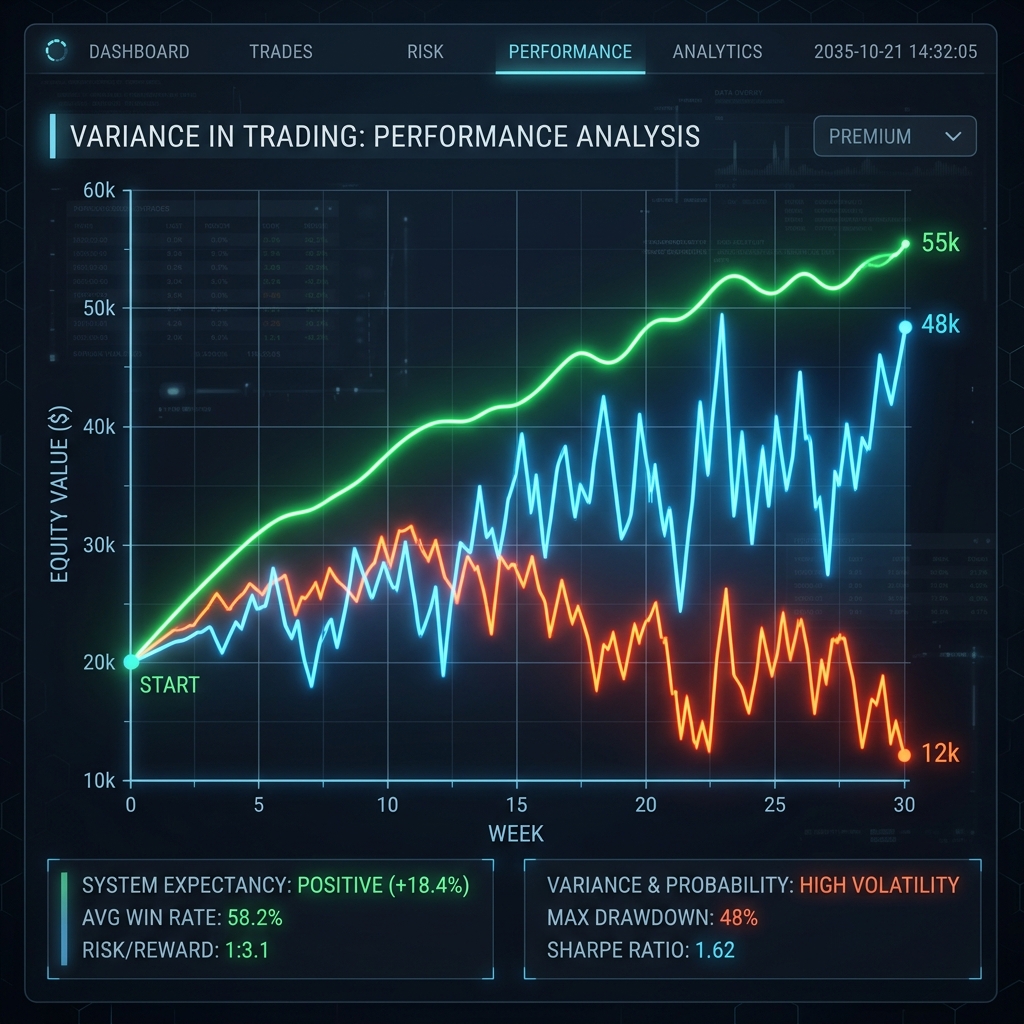
"Trading without structural filters is like sailing without a rudder: you react to every wave of momentum, completely unaware that you are drifting straight into a sandbar."
3. The Triple-Filtered Framework: Trend, Structure, and Trigger
To eliminate these false signals, you must build a three-layer filter system. Every trade in your playbook must pass three distinct validation gates before execution: Trend Bias, Structural Zone, and Zero-Line Crossover.
Filter 1: Trend Bias (The 200 EMA)
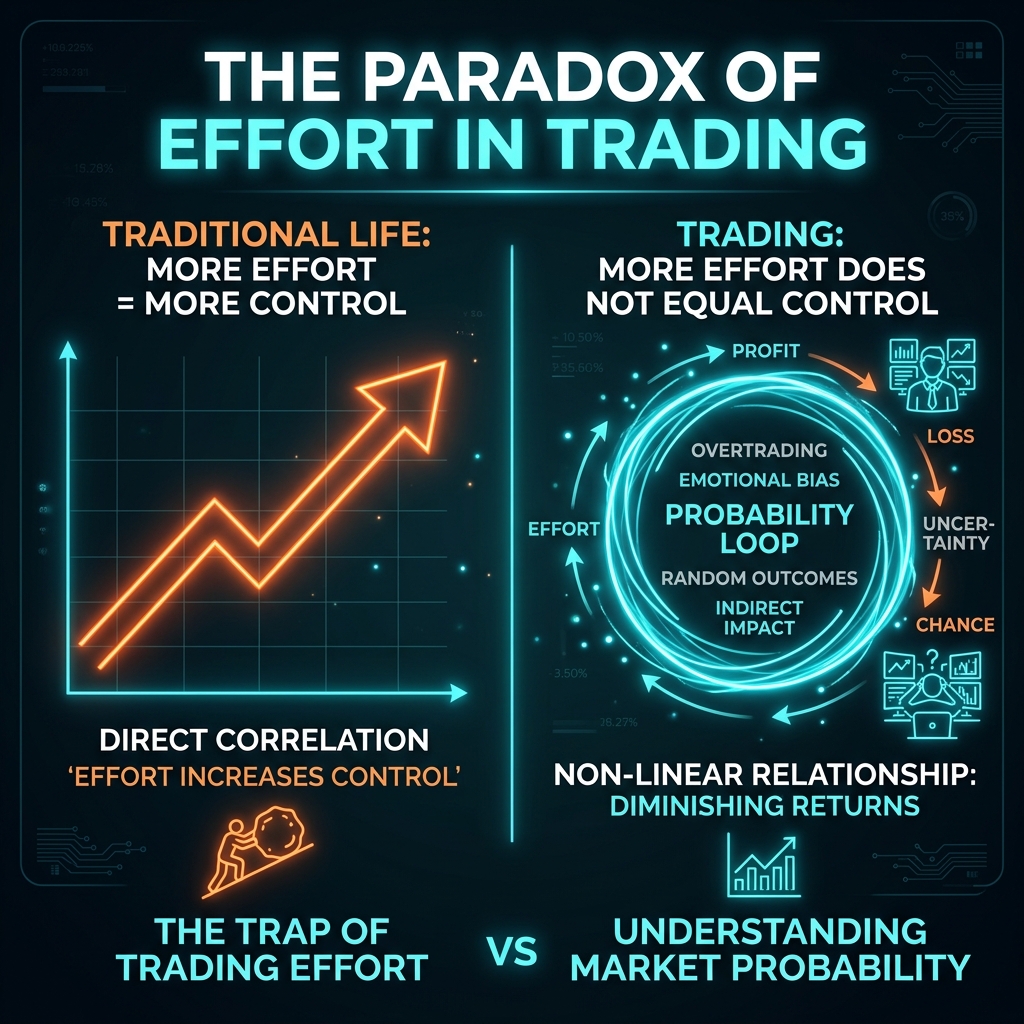
The first filter establishes your market direction. You must never trade against the dominant trend. To enforce this, we utilize a 200-period Exponential Moving Average (EMA) on your primary execution timeframe.
• **Long Rule:** You are only permitted to buy if the current price is trading above the 200 EMA.
• **Short Rule:** You are only permitted to sell short if the current price is trading below the 200 EMA.
Filter 2: Structural Zone (Support and Resistance)
Even when trading in the direction of the 200 EMA, you must not buy when price is overextended. You must wait for price to pull back to a key structural zone where institutional demand is likely to step in. A key structural zone is identified by:
• A key support level where price has bounced at least once previously.
• Prior day high, low, or VWAP levels.
• Key pivot zones where volume has previously accumulated.
Filter 3: Crossover Trigger (Zero-Line Rule)
The final filter is the trigger, which requires a specific crossover location relative to the zero line.
• **Long Trigger:** The MACD Line must cross above the Signal Line *below* the zero line. This indicates that momentum slowed down during the pullback (below the zero line) and is now turning back in the direction of the dominant trend.
• **Short Trigger:** The MACD Line must cross below the Signal Line *above* the zero line. This indicates that momentum rallied during the pullback (above the zero line) and is now turning back down with the trend.

How To Apply This
When price pulls back to a support level above the 200 EMA, do not place limit orders immediately. Wait for the MACD lines to dip below the zero line. Only execute when you see the actual upward crossover confirm on the close of the candle. This ensures you execute on confirmed momentum rather than predicting support.
4. Execution Blueprint: Step-by-Step Long Setup
Let's map out a realistic example of a long trade setup in the E-mini Nasdaq 100 (NQ) futures market using this triple-filtered process:
- Verify the Trend: Look at your 5-minute chart. The NQ is trading at 19,850, and the 200 EMA is calculated at 19,810. Since price is above the 200 EMA, your bias is strictly long. No short trades are allowed under any circumstances.
- Identify the Structure: Look back at the morning session. Price hit a low at 19,835 and bounced aggressively up to 19,880. Mark 19,835 as your key support level.
- Wait for the Pullback: NQ starts to roll over, dropping from 19,880 back down toward your marked support zone at 19,835. Price touches 19,836.
- Monitor the Oscillator: As price drops, the MACD Line falls below the Signal Line and crosses beneath the zero line, indicating a temporary bearish pullback within a bullish market.
- Execute the Trigger: Price holds the 19,835 level. On the next candle, the blue MACD line crosses back above the orange Signal line below the zero line. As soon as the crossover candle closes, enter a long position market order (e.g., at 19,842).
Recommended Tool: Nexus Chart Trader
Executing reactionary market entries in fast-moving futures like NQ requires rapid order placement. **Nexus Chart Trader** lets you define your bracket parameters (such as entry offset and initial stop-loss) and place entries with one click. By removing execution lag, you ensure your entry matches the exact crossover close, reducing slippage.
5. Risk Management: The 200 EMA as a Structural Wall
A systematic trading strategy is only as good as its risk management parameters. When executing the Triple-Filtered MACD Strategy, your stop-loss must be structural, not arbitrary. Place your stop-loss slightly below the key support level or below the 200 EMA line, whichever is closer to your entry.
Think of the 200 EMA and your support zone as a double wall. For the market to hit your stop-loss, sellers must break through both the institutional support level and the dynamic 200-period average. This structural placement protects your trade from random noise sweeps.
Once your stop-loss is placed, calculate your target using a fixed **1.5:1 Risk-to-Reward ratio**. For example, if your entry is at 19,842 and your stop-loss is at 19,822 (20 points of risk), your profit target must be set at 19,872 (30 points of reward). This positive risk reward ratio ensures that even with a 50% win rate, your account will experience steady capital growth over a large sample of trades.

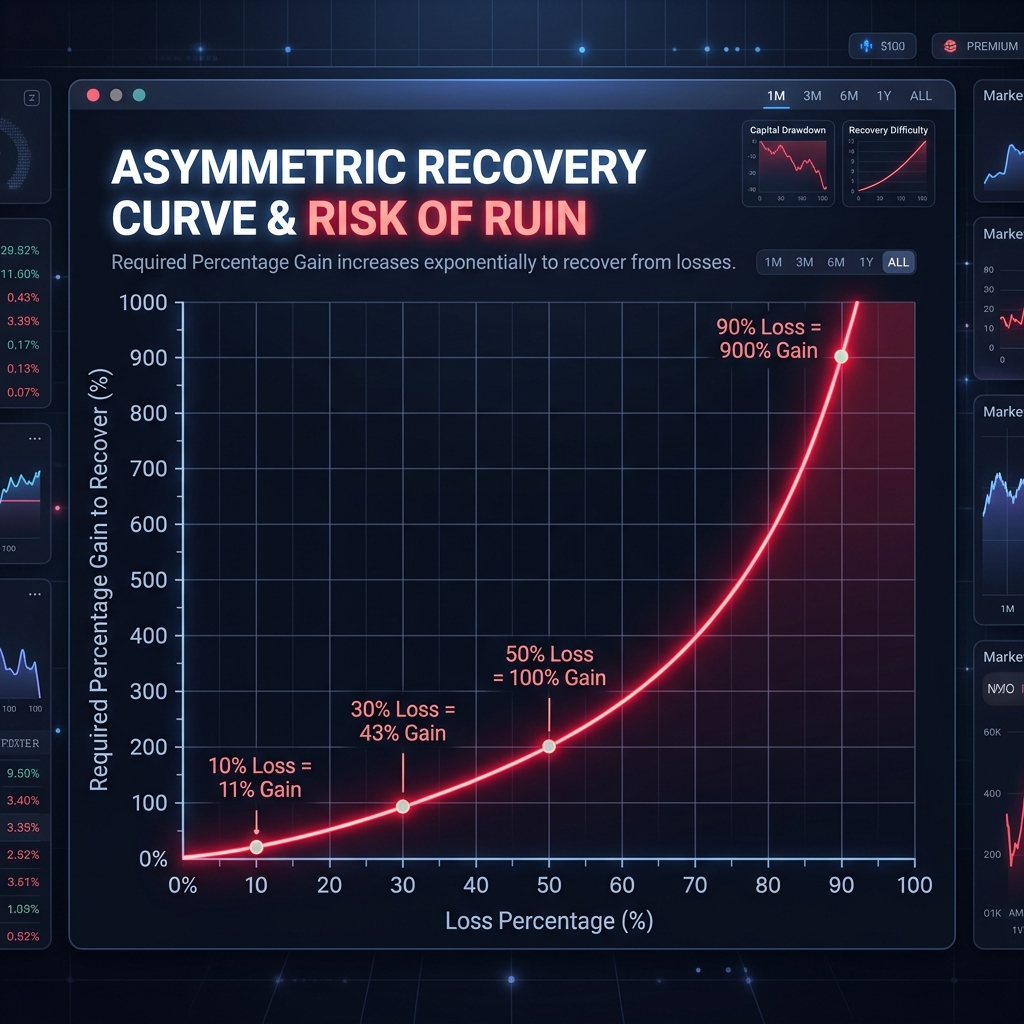
***"A professional trader seeks trades with a positive mathematical expectancy. By enforcing a 1.5 to 1 profit target, you ensure that your winners always outpace your losers, removing the need for a perfect win rate."
6. Tools That Can Help You Apply These Concepts
To implement this strategy systematically, you need to transition from discretionary execution to a robust infrastructure. Nexus Indicator provides several professional-grade tools for NinjaTrader 8 to support this framework:
- Nexus Chart Trader: Automates order execution. You can configure it in Risk/Reward Mode to automatically place a 1.5:1 profit target relative to your stop-loss distance. It also features *Tamper-Proof Daily Risk Locks* and *Global Loss Cooldowns* to prevent emotional trading if you suffer consecutive stop-outs.
- Nexus Trading Journal: Tracks your performance data. By logging your MACD trades, you can review metrics like average win rate, maximum adverse excursion (MAE), and profit factors, verifying if your filters are successfully eliminating false signals.
- Nexus Copier (Free & Pro): Synchronizes your execution across multiple accounts. If you trade this strategy across up to 3 evaluation or funded accounts (free version) or unlimited accounts (pro version), the copier replicates entries with minimal latency.
- Nexus Data Downloader: Downloads bulk historical data for backtesting. Before risking live capital, download historical data to run this MACD strategy through NinjaTrader's strategy analyzer, validating its performance across different market regimes.
Conclusion: Systematizing Your Edge
The MACD is a powerful tool for finding momentum, but only when used with structural context. By implementing the Triple-Filtered MACD Strategy, you eliminate the emotional decision-making that leads to whipsaws. You transition from an emotional retail trader chasing indicators to a systematic business operator executing a defined playbook. Ground your execution in trend and structure, automate your risk parameters, and let the mathematical expectancy play out.
Master Your Momentum Execution
Build a systematic trading command center. Enforce automated target brackets, tamper-proof daily locks, and multi-account copying directly in NinjaTrader 8.
Get The Nexus Bundle Now
Valentin V.
Lead Quantitative Developer • Nexus Indicator • GitHub • LinkedIn
Valentin V. is the Lead Quantitative Developer at Nexus Indicator, specializing in developing high-precision tools and indicators for NinjaTrader 8. With over a decade of experience in C# and NinjaScript, he has helped hundreds of prop firm traders professionalize their execution workflows through technical discipline, systematic risk management, and automation.
Frequently Asked Questions
Why does the MACD indicator give so many false signals when traded alone?
The MACD is a momentum oscillator that calculates the difference between two exponential moving averages. When the market is in a strong trend, crossovers are highly accurate. However, in sideways range-bound conditions or counter-trend movements, the MACD frequently whipsaws, generating false entry signals due to a lack of trend and structural filters.
Why is the 200 EMA used as the primary trend filter in this strategy?
The 200-period Exponential Moving Average (EMA) acts as a structural boundary. By restricting long entries to periods when price is above the 200 EMA and short entries to when price is below, you ensure your execution aligns with the dominant higher-timeframe order flow, increasing the probability of a successful expansion.
Why must a long MACD crossover occur below the zero line?
A crossover below the zero line indicates that momentum has temporarily shifted downward (a price pullback) within an overall uptrend. Executing when the MACD crosses back upward below the zero line allows you to enter the trend at a discount, capturing the resumption of buying pressure.
How does pairing the MACD with key support and resistance zones improve outcomes?
Support and resistance zones identify where large institutional participants are likely to defend positions or absorb sell orders. By waiting for price to interact with these key levels before executing a MACD crossover, you combine structural context with momentum triggers, eliminating entry signals in low-liquidity zones.
How should I calculate my position size for this MACD strategy?
Position size should be calculated dynamically based on the distance between your entry price and your stop-loss, which is placed below the key support structure or the 200 EMA. Your total dollar risk should represent a consistent, small percentage of your capital, such as 0.5% or 1% per trade, utilizing indicators like Nexus Tick ATR to size positions accurately.