EXECUTION AND RISK MANAGEMENT
Gang Mode vs. Trade Copiers: Why Parallel Multi-Account Execution Wins
"A trade copier watches a master account and races to mimic it. Gang Mode does not watch anything. Every account fires the same command at the same instant. There is no leader, no follower, no replication lag, no out-of-sync brackets. That is the difference between replication and parallel issuance."
If you have ever traded more than two accounts at once, you already know the feeling. You click Buy on the master account, and you watch the followers fill one by one in the orders window like dominoes. The first fills cleanly. The second is a tick behind. The third gets the rejection on margin. By the time the fifth account is positioned, the trade you intended is no longer the trade you are actually in. Your risk model said five identical positions. Your execution layer just handed you four positions plus a problem.
This article is about why that problem is structural to the trade copier architecture, why we built a different model called Gang Mode inside Nexus Chart Trader, and how the difference shows up in real prop firm sessions across rotating accounts. The audience here is multi-account prop firm traders, scalpers running mirrored playback accounts, and anyone who has ever wished they could click one button and have ten accounts move in lockstep.
The Core Argument in One Paragraph
A trade copier is a passive listener. It waits for the master account to act, then it replicates that action onto follower accounts. Gang Mode is an active broadcaster. When you click an order button, every eligible account issues its own order in parallel, from the same source intent (your click), with no master to wait for and no follower to lag behind. Replication is sequential by nature. Parallel issuance is not. The latency, the bracket drift, the rejection cascades, and the silent desyncs that plague every copier on the market exist because of the replication model itself, not because copier developers are lazy. You cannot copy what has not happened yet. You can broadcast right now.
How a Traditional Trade Copier Works
Every standard trade copier on the market, regardless of vendor, follows the same architectural pattern. The platform forces it on you. You designate one account as the master. The copier subscribes to the master account's order and execution events. When the master fires, the copier reads the order's state, builds a derived order, and submits it on each follower account. After fills, the copier monitors followers for partial fills, rejections, and bracket changes, then reconciles those independently for each account.
This pattern works. We have shipped a copier ourselves and it solves a real problem for traders who need it. But the pattern has six structural costs, and every replication-based copier inherits all of them.
Cost 1: Replication Lag Is Real and It Widens with Account Count
The master fires at time zero. A follower cannot fire until the master's event is dispatched, the copier's handler runs, the order is built, and the platform accepts the submission on the follower's connection. Every step is small, but every step is real, and the steps are serial. With ten follower accounts, the last follower receives its order noticeably later than the master. In a fast market, that gap is the difference between getting in at your intended price and chasing the wave that the master has already started.
Cost 2: The Master Must Place a Real, Funded, Live Order
A copier cannot do anything until the master account actually places the trade. That means your master eats the slippage first, suffers the rejections first, and bears the margin check first. The followers ride a wave that has already moved by the time it reaches them. This is fine if your master is identical to your followers. It is structurally unfair if your master is your largest funded account and your followers are smaller playback accounts. You are taxing your most valuable position with the worst fill on every trade.
Cost 3: Brackets Are Reconciled Independently Per Account
After the entry copies, each follower's stop loss and take profit are managed by separate logic on separate threads for separate accounts. If you drag a stop on the master, the copier has to detect the change, decide what to do, and re-submit on each follower. Three latency windows, every time you adjust anything. Multi-target exits make it worse because the partial fill on the master triggers a rebalance that has to be re-derived on each follower individually.
Cost 4: A Copier Can Desync Silently
If a bracket update misses the copier's event handler, the followers diverge. Event drops are rare but not zero, and platforms drop events more often under heavy load, which is exactly when you can least afford it (news prints, gap opens, fast moves). You may not notice the desync until later, when the master is at break-even and three followers are still ten ticks away from their original stop, and one already got stopped out for a full loss.
Cost 5: Rejection Cascades Have No Clean Answer
Master fills. Follower one rejects on margin. What should the copier do? Flatten the master to keep risk symmetric? Leave the master alone and accept the divergence? Retry the follower? There is no clean answer. Most copiers (ours included, by design) log the rejection and move on, which means you now have a nine-account position instead of the ten-account position you intended, and your risk model just changed underneath you without telling you.
Cost 6: A Copier Is a Separate Code Path
Every safety feature, every new order type, every bracket improvement has to be implemented twice: once in your main trade panel and once in the copier. Inevitably they drift. The copier becomes a second-class citizen, lagging behind the main UI in supported features. New traders bump into this on day one ("why does the master support this exit mode but my followers do not?") and there is rarely a satisfying answer.
How Gang Mode Works
Gang Mode lives inside the main Nexus Chart Trader panel. It is not a separate add-on, not a separate process, not a separate event loop. When you click the order button with Gang Mode armed, the button does not nominate a master and ask a copier to mimic it. Instead, the click is treated as the original intent, and that intent is broadcast to every eligible Nexus Chart Trader instance on your workstation in parallel. Each instance is tied to its own account, on its own chart, with its own full set of risk and bracket logic.
The architectural shift is from "one order that produces N derived orders" to "one user intent that produces N independent orders." Every account is a first-class citizen. There is no master in the architectural sense. Each chart submits for its own selected account, using the same risk filters, the same bracket logic, the same advanced exit modes that the rest of the panel uses. The same code path. Not a copy of it.
The Mental Model
A trade copier is a relay race. The baton has to be physically handed from one runner to the next, and every handoff has a cost. Gang Mode is a starting gun. Everyone runs at the same instant from the same signal. The signal does not get passed; it arrives everywhere at once.
Side by Side: What This Buys You on the Desk
| Concern | Traditional Trade Copier | Gang Mode |
|---|---|---|
| Order origin | Replicated from the master account's already-submitted order | Originated independently per account from the same user intent |
| Dispatch pattern | Serial. Each follower waits for the prior step in the replication chain. | Parallel. All eligible accounts dispatch from the same click. |
| Master required? | Yes. A designated master must exist and must fire first. | No. There is no master role. Each chart submits for its own account. |
| Bracket sync | Each follower's bracket is reconciled independently. Drift is common. | Each chart's bracket logic runs in parallel from the same source parameters. |
| Multi-target exits | Each follower runs its own multi-target logic; partial-fill races between accounts can cause drift. | Each chart runs its own multi-target logic from the same inputs at the same moment. |
| Risk lock interaction | Copier must decide what to do when the master is locked but followers are not (or vice versa). | Each account checks its own eligibility. Locked accounts simply do not participate. |
| Rejection handling | A follower rejection silently breaks the intended N-account position. | A rejection on one account does not contaminate the others. No master role to "protect." |
| Feature drift | Copier perpetually lags the main UI in supported order types and exits. | Every new panel feature is automatically multi-account by inheriting the broadcast pattern. |
| Smart Rotation interaction | Awkward. The copier does not natively understand rotation rules. | Gang Mode and Smart Rotation are mutually exclusive by design, so they cannot run at once. |
| Trade recording | Manual per chart. Easy to forget on a multi-account session. | Enabling Gang Mode automatically arms recording, so your multi-account sessions are always captured for review. |
What This Feels Like in a Real Session
The difference is not academic. On a typical multi-account close (ten playback accounts flattening in unison), the serial dispatch model produces a visible "wave" in the orders window. Accounts complete one after another, and the gap from the first to the last is long enough to read each name as it goes flat. Under the Gang Mode dispatch model, the same close appears as a single block. Every account goes flat at essentially the same wall-clock instant. There is no wave. The screen updates as one event.
You see it most clearly on a fast reversal. With a copier, the master gets stopped out at the intended price, follower one gets a tick of slippage, follower two gets two ticks, and the last follower is several ticks deeper into the loss because the market moved while the replication chain was still propagating. With Gang Mode, the dispersion exists, but it is bounded by what the platform's own routing produces, not by what your software adds on top. Every account starts at the same moment. The only variance left is the platform's own per-account routing, which is below the layer where your code can help anyway.
For traders running playback accounts in a rotation (for example, five accounts cycled across the trading week to satisfy consistency rules), the practical impact is two-fold. First, identical accounts truly behave identically, which is what your risk model assumes. Second, when you flatten a losing position across all five, you do it in a single observable instant, which protects the worst-positioned accounts from being held an extra fraction of a second while earlier accounts close. That fraction is where avoidable losses live.
Lived Experience: Switching From Serial to Parallel
The first version of multi-account close in Nexus Chart Trader was a serial loop. It worked. It was clear. It was easy to reason about. But on ten accounts, the click-to-fully-flat window was long enough that you could literally watch the dominoes fall. We replaced the serial loop with a parallel broadcast pattern, the same one Gang Mode uses on entry, and the click-to-fully-flat window dropped to roughly half. Not because each individual account got faster (they did not), but because they were no longer waiting in line for each other.
The second improvement was on the post-flatten safety wait. Previously, the panel held a guard for a fixed period after every multi-account close to make sure all confirmations had landed. We replaced that fixed wait with an adaptive check that releases the guard the instant the local account reports flat. On a clean close that is essentially the moment the last fill confirmation arrives, which is much faster than the worst-case fixed wait it replaced. The combination of the parallel dispatch and the adaptive safety wait roughly halved the total click-to-button-idle time on a ten-account session in our own testing.
The interesting part is what we did not have to give up to get this speed. Every safety mechanism that the main panel ships still runs, per account, on its own thread, with its own state. A locked account still refuses to participate. A skip-listed account still skips. An account on the wrong instrument still ignores the broadcast. The speed comes from removing the serial wait, not from removing the safety checks.
Why This Is Not "Cutting Corners"
The first reflex among careful traders is to assume that something this fast must be cheating. It is not. Gang Mode inherits every safety mechanism that lives in the main Nexus Chart Trader panel, because each broadcast destination is a real Nexus Chart Trader instance, with the full risk stack engaged. Specifically:
- Per-account eligibility cascade. Before an account is added to a broadcast, it must pass the same checks used by the main trade panel: instrument match, connection live, not on the skip list, not risk-locked, eligible for trading. The same code path. Not a copy of it.
- Per-account risk locks remain authoritative. Tamper-proof daily risk locks, profit protector triggers, loss cooldown periods, news lock windows, and session schedules are all evaluated per account. Gang Mode is a dispatch mechanism, not an override.
- Per-account bracket reconciliation. Each chart manages its own bracket lifecycle for its own account. The broadcast hands every chart the same source intent at the same moment; from there, each chart's bracket logic runs on its own state.
- Mutual exclusivity with rotation. Gang Mode and Smart Rotation cannot be enabled simultaneously. Gang Mode is "trade every eligible account in parallel." Smart Rotation is "cycle accounts one at a time." Running both at once would defeat the purpose of each. The panel prevents the combination by design.
- Automatic recording arming. Enabling Gang Mode automatically arms trade recording on the local chart, and the recording toggle cannot be disarmed while Gang Mode is active. Multi-account sessions are always captured for later review through the Nexus Trading Journal pipeline. You cannot accidentally run a 10-account session and lose the data.
Common Pitfall
Assuming "faster" means "less safe." Speed in Gang Mode comes from removing the serial wait between accounts, not from removing the safety checks within each account. Every per-account guard is still authoritative.
Professional Routine
Arm Gang Mode before the session starts. Confirm the eligible account count on each chart's panel. Place one practice order in sim before going live, so you can visually confirm the parallel dispatch is hitting every account you intend.
When You Should Still Use a Trade Copier
This article would be dishonest if it ended with "always use Gang Mode." There are two scenarios where a copier is still the right tool.
Cross-machine replication. If your master account runs on PC A and your follower accounts must run on PC B (for firewall reasons, broker requirement, or geographic separation), only a copier with a network bridge can do that work. Gang Mode coordinates accounts on a single workstation; it does not (and should not) reach across machines. If your setup requires cross-machine replication, you are correctly in copier territory.
Mirroring a third-party signal. If your entries originate from a non-Nexus source (an external automated strategy, a webhook, a manual trader at another desk), you cannot make them click the Nexus button, so a copier that listens to that external source is your only option. Gang Mode requires the entry to originate from inside the Nexus Chart Trader panel.
Outside those two cases, the parallel-issuance model is strictly better than the replication model for one-workstation multi-account execution.
How This Connects to the Rest of the Nexus Workflow
Multi-account execution is the most visible benefit, but the second-order effects are where Gang Mode starts to compound. Because every account in a broadcast is a real Nexus Chart Trader instance, every account gets the full risk stack for free: tamper-proof daily risk locks, the profit protector system, mandatory loss cooldowns, and news lock automation. The same features that protect a single account on a single chart now protect ten accounts in parallel, with no second-class follower path that lags behind in feature support.
For traders rotating playback accounts to satisfy prop firm consistency rules, Gang Mode pairs cleanly with the per-account skip list. You can broadcast to the four accounts in this week's rotation while the fifth (the one you are "parking" to keep the consistency math clean) sits silently out of the broadcast, automatically. No mental overhead. No re-binding follower lists. The eligibility cascade handles it.
If you want the deeper context on how multi-account prop firm workflows tie together, our account rotation guide covers the strategic side of cycling playback accounts, and our Apex consistency rule guide explains the prop firm math that makes per-account distribution matter for payout. For the execution layer, our NinjaTrader prop firm 2026 update walks through how Nexus Chart Trader's risk stack handles the new platform-side guard rails. And if you have not yet looked at how recorded multi-account sessions translate into actionable analytics, our handling trading losses piece covers how journal data turns a bad day into a learning loop.
External Context Worth Reading
If you want to understand the broader industry context for why low-latency, in-process execution beats event-driven replication, a few reference points are worth your time. The NinjaTrader platform overview covers the execution architecture that any NT8 product builds on. The CME's electronic trading considerations document explains the institutional view of execution latency and order routing. The CFTC market surveillance overview gives the regulatory framing for why systems that handle multiple accounts must keep per-account state clean. And the Investopedia primer on order management systems is a clean introduction to the concept of order routing fan-out, which is essentially what Gang Mode does at the trader-tool layer.
Common Mistakes Multi-Account Traders Make
Even with the right tooling, the failure modes on multi-account execution are predictable. The biggest ones, in order of frequency:
- Treating the master account as expendable. Traders who run a copier often configure their largest, most expensive funded account as the master because "it's the one I trade." That account then absorbs the worst slippage on every signal. With Gang Mode there is no master role, so the question does not exist.
- Not checking eligibility before the session. A locked account, a skip-listed account, or an account on the wrong instrument will silently sit out of any broadcast. If you do not glance at the panel before the open, you might think you are trading ten accounts when you are actually trading seven.
- Mixing Gang Mode and rotation mentally. Some traders try to "broadcast to the rotation," which is a contradiction. Gang Mode trades every eligible account; rotation cycles one at a time. Pick the workflow that matches the session goal: parallel exposure for size, rotation for distributing risk across accounts over time.
- Skipping recording. A 10-account session that is not journaled is a 10-account session you cannot learn from. Gang Mode auto-arms recording, but if you are running other workflows it is on you to confirm the recording badge is lit before the first trade.
- Forgetting that risk locks are per account. One account hitting its daily loss limit does not lock the others. That is by design (each account's risk envelope is its own), but it is also a place where traders get caught: the broadcast continues on the eligible accounts, and the locked one simply does not participate. Read the panel state, not your assumption about the panel state.
The One-Sentence Summary
A trade copier is a passive listener replaying what happened to a master account. Gang Mode is an active broadcaster issuing the same command to every account at the same instant. Replication is always slower, always thinner on safety because it has to re-implement the safety stack on the follower side, and always vulnerable to silent drift. Parallel issuance is not.
If your accounts are all on one workstation and your entries come from the Nexus Chart Trader panel, the upgrade from a copier-style workflow to Gang Mode is the single largest improvement to multi-account execution speed you can make without changing brokers or hardware. The architecture is the difference. Everything else is a consequence of it.
Stop Copying. Start Broadcasting.
Trade ten accounts as fast as one. Gang Mode is built into Nexus Chart Trader, with the full risk stack on every account, every time.
Explore Nexus Chart Trader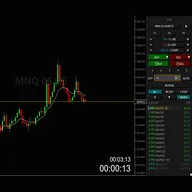
Valentin V.
Lead Quantitative Developer • Nexus Indicator • GitHub • LinkedIn
Valentin V. is the Lead Quantitative Developer at Nexus Indicator, specializing in developing high-precision tools and indicators for NinjaTrader 8. With over a decade of experience in C# and NinjaScript, he has helped hundreds of prop firm traders professionalize their execution workflows through technical discipline, systematic risk management, and automation.