Risk Management & Execution
How to Survive High-Impact News Events in Prop Firm Trading: The 2026 News Lock Playbook
"The fastest way to lose a funded account isn't bad analysis, it's being in a position when Non-Farm Payrolls drops and the market moves 80 ticks in 400 milliseconds. Automation is the only reliable defense."
High-impact news events are the single most dangerous recurring threat to prop firm traders. Every month, Bureau of Labor Statistics releases, Federal Reserve announcements, and CPI prints create windows of extreme volatility where spreads widen, slippage explodes, and stop-loss orders fill 20–50 ticks beyond their intended levels. For traders managing funded accounts with trailing drawdown limits of $2,000–$3,000, a single unprotected news event can erase weeks of careful execution in under five seconds.
This guide covers the complete framework for surviving news events as a prop firm trader in 2026, from understanding exactly why these events are so dangerous at the execution level, to building an automated protection system with Nexus Chart Trader's News Lock, to structuring your post-news re-entry for maximum edge. If you have ever lost a funded account during FOMC, NFP, or CPI, this is the playbook that prevents it from happening again.
Why News Events Destroy Funded Accounts
To understand why news events are so devastating for prop firm traders specifically, you need to understand what happens at the market microstructure level during a major economic release. The dynamics are fundamentally different from normal trading conditions, and the risks compound in ways that most retail traders never anticipate.
The Liquidity Vacuum
In the 30–60 seconds before a scheduled high-impact release, institutional market makers systematically pull their resting orders from the order book. This creates what traders call a "liquidity vacuum", the visible depth on the DOM (Depth of Market) may drop from a normal 500–1,000 contracts per level to as few as 10–50 contracts. When your stop loss is resting in a market with 90% less liquidity, the fill quality degrades catastrophically.
Consider a practical example on the ES (E-mini S&P 500). During normal trading hours, a 4-tick stop-loss order has an expected slippage of 0–1 tick. During the first second after an NFP release, that same 4-tick stop could fill 15–30 ticks away from its resting level. On a 5-lot position, that is an additional $1,500–$3,750 in unexpected loss, potentially more than your entire trailing drawdown buffer.
The Spread Expansion Problem
Alongside the liquidity vacuum, bid-ask spreads on futures instruments widen dramatically. The ES normally trades with a 1-tick spread ($12.50). During high-impact releases, the effective spread can temporarily balloon to 4–8 ticks ($50–$100 per contract). For NQ (E-mini Nasdaq), spreads can reach 10–20 ticks ($50–$100 per contract). This means that even if you react instantly and try to flatten your position at the moment of release, you are paying a spread tax that dwarfs anything you would encounter during normal trading. Understanding this execution reality is fundamental to the API lag and settlement dynamics we have previously covered.
The NinjaTrader API Timing Problem
There is a technical dimension that makes news events even more dangerous on NinjaTrader 8. During extreme market velocity, the time between order submission and fill confirmation can stretch from the normal 50–200ms to 1–5 seconds. During this window, the platform's internal state, what it thinks your position is, can diverge from your actual position at the exchange. If you are running bracket orders, this can lead to orphaned stops, duplicate entries, or positions that fail to flatten when manually requested.
This is not a NinjaTrader deficiency, it is a fundamental characteristic of electronic trading during extreme conditions. Every platform experiences it. The difference is whether you have a system that accounts for it proactively or whether you discover it retroactively when your account is already in violation.
The Three-Layer News Risk Stack
News events create a compounding risk stack: (1) Liquidity vacuum → stop orders fill at catastrophic levels, (2) Spread expansion → exit costs multiply 4–8x, (3) API timing lag → platform state diverges from exchange state. Any one of these alone is manageable. All three simultaneously create conditions where a $200 expected loss becomes a $2,000 actual loss. The only reliable defense is to have zero exposure before the event fires.
The 2026 Prop Firm News Trading Landscape
The prop firm industry's stance on news trading has evolved significantly through 2025 and into 2026. Understanding these rules is critical because violating them, even accidentally, can result in account termination regardless of whether you were profitable.
Firm-by-Firm News Trading Policies
Most major prop firms in 2026 fall into one of three categories regarding news event trading:
- Explicit prohibition windows: Some firms prohibit all trading within 2–5 minutes of high-impact releases. Violations are detected automatically by comparing your trade timestamps against a maintained economic calendar. These firms will close your account for a single infraction, regardless of profit.
- Permitted but monitored: Firms like Apex and certain Topstep models allow news trading but flag "abnormal trading behavior." If your average position is 2 contracts and you suddenly load 10 contracts 30 seconds before NFP, the pattern detection will flag your account for manual review. Even if the trade was profitable, the payout can be denied. We covered this monitoring dynamic in detail in our prop firm consistency rules guide.
- Unrestricted: A small number of firms have no news restrictions, but these typically have tighter drawdown limits or higher fee structures to compensate for the additional risk exposure.
Regardless of which category your firm falls into, the mathematical reality remains unchanged: unprotected exposure during major releases produces negative expected value for prop firm traders operating within trailing drawdown constraints.
The Hidden "Abnormal Activity" Clause
Even firms that technically "allow" news trading have broad discretion under their terms of service. Most agreements include language around "abnormal trading patterns" or "gambling behavior." If your Rithmic or Tradovate logs show that you entered three times your normal size at 8:29:45 AM, 15 seconds before NFP, and held for 8 seconds before exiting, many risk desks will classify this as a news scalping strategy and deny your payout or terminate the account.
The pattern they are looking for is simple: entries immediately before a release, exits immediately after, with elevated size. Automated news protection eliminates this risk entirely by ensuring you are completely flat during the event window, which produces a clean audit trail that no compliance team can question.
Building Your News Protection Framework
Professional news event protection is not a single setting, it is a multi-layer framework that combines calendar awareness, automated position management, session scheduling, and structured re-entry rules. Here is the complete system.
Layer 1: The Economic Calendar Hierarchy
Not all news events carry equal risk. The key to efficient news management is understanding which events actually move markets and which are noise. In 2026, the events that consistently produce tradeable, and dangerous, volatility on US futures are:
Tier 1 (Must-Avoid):
- Non-Farm Payrolls (NFP), First Friday of every month, 8:30 AM ET. Average ES move: 30–80 ticks in the first 5 minutes.
- FOMC Rate Decision & Statement, Eight times per year, 2:00 PM ET. Average ES move: 40–120 ticks in the first 15 minutes.
- Consumer Price Index (CPI), Monthly, typically second Tuesday, 8:30 AM ET. Average ES move: 25–60 ticks.
- Producer Price Index (PPI), Monthly, 8:30 AM ET. Average ES move: 15–40 ticks.
- FOMC Meeting Minutes, Three weeks after each FOMC decision, 2:00 PM ET. Average ES move: 20–50 ticks.
Tier 2 (High Awareness):
- Initial Jobless Claims, Weekly, Thursday 8:30 AM ET. Usually 5–15 tick impact unless significantly off-consensus.
- ISM Manufacturing/Services PMI, Monthly, 10:00 AM ET. Can produce 10–30 tick moves.
- Retail Sales, Monthly, 8:30 AM ET. 10–25 tick impact typically.
- GDP (Advance, Preliminary, Final), Quarterly, 8:30 AM ET. 15–40 ticks depending on revision magnitude.
The Nexus Chart Trader News Lock system auto-fetches this data directly from Forex Factory's economic calendar, so you do not need to manually track these events. But understanding the hierarchy helps you configure your lock windows appropriately, a 5-minute pre-lock for NFP is different from a 2-minute pre-lock for weekly jobless claims.
Layer 2: Automated News Lock Configuration
The Nexus Chart Trader News Lock system is the core of the protection framework. Here is exactly how it works and how to configure it for maximum protection:
How the system operates:
- On startup, NCT fetches the current week's economic calendar data automatically
- It identifies all events flagged as "high impact" and stores their timestamps
- As each event approaches, a dynamic red "Pulse" overlay appears on your chart, showing proximity to the news event
- At your configured pre-event threshold, the system automatically flattens all open positions and cancels all pending orders
- Pre-event visibility shows impact level warnings so you can prepare mentally and plan your post-news strategy
Configuring Your Pre-Event Window
The pre-event window determines how many minutes before a high-impact event the system flattens your positions. For Tier 1 events (NFP, FOMC, CPI), we recommend a minimum of 5 minutes. For Tier 2 events, 2–3 minutes is typically sufficient. The key insight: it is better to sacrifice 5 minutes of potential trading time than to risk 5 weeks of recovery from a blown drawdown. If you are running a multi-account strategy as covered in our account rotation guide, the News Lock protects all synchronized accounts simultaneously.
Layer 3: Session Schedule as a Secondary Shield
The News Lock handles specific events, but the Trading Schedule Enforcement in NCT provides a broader protective layer. By defining strict Start and End times for your trading session, you create a hard boundary that prevents all trading outside your defined window.
For example, if you are a morning session trader who trades from 9:00 AM to 11:30 AM ET, the session schedule will auto-flatten all positions and auto-cancel pending orders at 11:30 AM, regardless of whether a news event is coming at 2:00 PM (like FOMC). The 5-minute warning pulse before session end gives you time to manage exits cleanly rather than being surprised by a sudden flatten.
This combination, News Lock for specific events, Session Schedule for broad containment, creates a redundant safety net. Even if one layer fails to trigger for any reason, the other provides backup protection.
Layer 4: Settlement Cooldown During Volatile Conditions
If you do decide to re-enter the market after a news event (covered in Section 5), the Settlement Cooldown becomes critical. This mandatory delay between fills protects against HFT slippage and API sync lag that persists for several minutes after major releases. During this period, the order book is still rebuilding, spreads are still elevated, and partial fills are common. The settlement cooldown prevents your system from sending duplicate or conflicting orders while the platform reconciles with the exchange, an essential safeguard as we detailed in our settlement cooldown deep dive.
Lived Experience: The March 2026 CPI Wipeout
We recently worked with a group of traders running 8 funded Apex accounts across ES and NQ. They had a combined floating profit of approximately $18,000 and were preparing for their first coordinated payout cycle. On March 12, 2026, the February CPI print came in significantly hotter than consensus, core CPI at 3.4% versus 3.1% expected.
Three of the traders had positions open at 8:30 AM when the data dropped. Here is what happened to each:
Trader A (No protection): Was long 3 NQ contracts. The market gapped down 65 ticks in the first 2 seconds. His stop was set at 15 ticks. It filled at -47 ticks due to the liquidity vacuum. Total loss: $2,820. His trailing drawdown was $2,500. Account terminated instantly.
Trader B (Manual approach): Had set an alarm for 8:25 AM and planned to flatten manually. The alarm went off, but he was in the kitchen. By the time he returned and clicked flatten at 8:29:52 AM, his market order filled with 6 ticks of slippage due to pre-event spread widening. He survived, but gave back $360 unnecessarily, and the stress of the close call affected his trading for the rest of the week.
Trader C (News Lock enabled): Had Nexus Chart Trader's News Lock configured with a 5-minute lock window. At 8:25 AM, the system automatically flattened her 2 ES contracts at market, cancelled her resting limit order, and locked the session. She was sitting at her desk watching the chaos unfold with zero exposure. When the dust settled at 8:45 AM, she reviewed the post-news structure and re-entered a short position at a clear resistance level confirmed by Nexus Levels. She finished the day green.
One of those three traders lost a $150,000 funded account over a data print they knew was coming. The event was on every economic calendar. The time was publicly available. The only variable was whether the protection was automated or left to human discipline.
The Manual Approach
Setting phone alarms, trying to remember to flatten before events, relying on willpower to close a winning position "just in case." Fails when you are away from the screen, hesitate because you are in profit, or misjudge the event time due to timezone confusion.
The Automated News Lock
System fetches the calendar automatically, shows visual proximity warnings via the red Pulse overlay, and flattens all positions at the configured lock window, regardless of whether you are at your desk, in profit, or emotionally attached to the trade. Zero human decision-making required.
The Post-News Re-Entry Framework
Surviving the news event is only half the battle. The other half is knowing when and how to re-enter the market after the volatility subsides. This is where most traders who successfully avoid the initial spike then give back their protection advantage by jumping in too early.
The 10-Minute Settling Rule
After a Tier 1 news event, the market typically goes through three distinct phases:
- Phase 1 (0–2 minutes): The Spike. Initial violent directional move. Spreads are at their widest. Liquidity is at its lowest. This is where 90% of news-related account damage occurs. There is zero edge trading here unless you have sub-millisecond execution infrastructure.
- Phase 2 (2–10 minutes): The Chop. Market begins to digest the data. You will see sharp reversals, false breakouts, and "stop hunts" as algorithmic systems test both extremes. Spreads begin to normalize but are still elevated. Many traders who avoided the spike lose money here because they interpret the first pullback as "the move" and get caught in the counter-reaction.
- Phase 3 (10+ minutes): The Trend. Market establishes a directional bias based on the fundamental implications of the data. Liquidity returns. Spreads normalize. This is where skilled traders find their edge, using the structural information created by the spike to identify high-probability entries at levels the market has now defined.
The 10-minute rule is simple: do not re-enter until Phase 3 begins. Use that time to analyze what happened, identify the key levels created by the spike, and wait for confirmation from your indicators.
Post-News Level Identification
Major news events create some of the highest-quality structural levels in trading. The spike high and spike low of the initial move become powerful reference points because they represent the extreme levels where institutional orders were filled. These levels often act as support and resistance for the remainder of the session, sometimes for multiple days.
After the News Lock releases, use Nexus Levels to identify the new HH (Higher High), LL (Lower Low), HL (Higher Low), and LH (Lower High) structure created by the news reaction. The automatic market structure labeling system will map these levels in real-time as they form, giving you a clean visual framework for your re-entry.
Combine this with Nexus Volume to confirm whether the post-news move has genuine institutional participation. Volume spike detection, where volume exceeds average volume multiplied by the configurable multiplier, will highlight which of the post-news candles represent real commitment versus thin-market noise.
Re-Entry Execution with Risk Controls
When you do re-enter after the settling period, your risk management should be tighter than normal. The market is still in a heightened volatility state, and your ATR readings will be elevated. Here is the framework we recommend:
- Reduce size by 50%: If your normal position is 4 contracts, trade 2 contracts for the first post-news trade. You can use the Tick ATR position sizing methodology to dynamically calculate this based on the expanded volatility.
- Use Dynamic ATR-based Take Profit: NCT's dynamic TP adjusts based on real-time volatility multipliers. After a news event, ATR is elevated, which means your take profit target automatically widens to account for the larger candle ranges. This prevents you from setting a 10-tick target in a market that is moving in 30-tick swings.
- Enable Loss Cooldown: Configure a mandatory loss cooldown period. If your first post-news trade is a loser, the timer only starts once all positions are flat, preventing you from immediately re-entering in a state of frustration. This mandatory cooling-off period is the behavioral circuit breaker that separates professional execution from revenge trading.
- Engage Profit Protector: Set the Profit Protector system with a configurable trigger and minimum threshold. If the market moves in your favor after the news and you hit your trigger (e.g., $800), the system auto-flattens if profit retraces to the minimum (e.g., $600). This prevents the common scenario of catching a beautiful post-news trend, watching it reverse, and giving it all back.
Building Your Weekly News Calendar Workflow
Protection is not just about what happens in the moment, it is about having a systematic weekly process that ensures you are never surprised. Here is the workflow that professional traders use:
Sunday Evening Preparation
- Review the week's economic calendar: Identify all Tier 1 and Tier 2 events for the coming week. Note their exact times and which instruments they affect most directly.
- Configure your session schedules: If you have an FOMC announcement on Wednesday at 2:00 PM and you normally trade until 3:00 PM, consider ending your Wednesday session at 1:50 PM. This removes any ambiguity, you are simply not trading during the event window.
- Verify News Lock is active: Confirm that NCT has fetched the latest calendar data and that the upcoming events are displaying in the system. Check that your pre-event window is set appropriately for the event tier.
- Plan your post-news opportunities: Major news events create the best structural levels of the week. Pre-identify which events you want to trade the aftermath of, and prepare your analysis framework ahead of time.
Daily Pre-Session Checklist
Before each trading session begins, verify the following:
- Is there a high-impact event during your session window today?
- If yes, is the News Lock confirmed active with the correct lock window?
- Are your tamper-proof daily risk locks set? (These protect you if the session itself becomes volatile, even without a scheduled event.)
- Is your Profit Protector configured for today's consistency targets?
- Have you reviewed yesterday's performance in Nexus Trading Journal to ensure you are in the right psychological state to trade?
This 5-minute daily check, integrated with the NinjaTrader 8 setup guide we published previously, creates a professional pre-flight routine that eliminates "I forgot about NFP" as a failure mode.
Advanced: Multi-Account News Protection
If you are running multiple funded accounts, a common strategy in 2026 as covered in our account rotation guide, news protection becomes even more critical. A single unprotected news event can wipe out multiple accounts simultaneously.
Synchronized Flatten Across Accounts
When using Nexus Copier to synchronize trades across a master and follower accounts, the News Lock on your master account triggers a flatten that cascades to all followers. This means you do not need to configure news protection on each individual account, the master's News Lock automatically protects the entire group.
However, there is a timing consideration. The flatten command propagates from master to follower accounts with a small reconciliation delay. The cumulative delay across multiple followers is still well under one second, so for a 5-minute pre-event lock window it is entirely negligible. But it reinforces why a 30-second or 1-minute lock window is dangerously tight for multi-account setups.
Account-Type Sensitivity During News Windows
NCT's account-type sensitivity, which auto-detects "Professional" vs "Evaluation" accounts by keyword matching, becomes particularly valuable around news events. Evaluation accounts typically have tighter drawdown limits and stricter behavior monitoring than professional (funded) accounts. You can configure different risk parameters per account type, applying more conservative News Lock windows on evaluation accounts where the cost of a violation is losing the entire evaluation fee.
Common News Trading Mistakes
Even experienced traders make these errors around news events. Recognizing them before they happen is the first line of defense.
Mistake 1: "I'll Just Watch and React"
Human reaction time is approximately 200–300 milliseconds for a simple stimulus. The market moves in 1–5 milliseconds. By the time you see the number, process it, and click flatten, the market has already moved 20–40 ticks. There is no human response fast enough to compete with algorithmic execution. Automated pre-event flattening removes human reaction time from the equation entirely.
Mistake 2: "The Data Won't Be That Bad"
Many traders convince themselves to hold through news because they have a directional bias. "I'm short, and CPI will come in hot, so my position is hedged." The problem is that even if your directional bias is correct, the path to your target may include a violent 40-tick spike against you that triggers your stop before the market reverses in your favor. Being right on the direction but wrong on the path is the most expensive kind of correct trade analysis.
Mistake 3: "I'll Scale Down Instead of Flattening"
Some traders reduce their position to 1 contract instead of going fully flat before news. This is a half-measure that provides the illusion of safety while still exposing you to the full slippage and spread expansion risk. One NQ contract with 40 ticks of slippage is still $200 of unexpected loss. And psychologically, having any position open during a news event keeps you emotionally tethered to the screen, which often leads to impulsive re-entries during the Phase 2 chop period.
Mistake 4: "I'll Trade the Number"
First-reaction news trading, trying to immediately trade the directional move after the data prints, requires co-location servers, sub-millisecond execution, and institutional-grade data feeds. Retail traders on Rithmic or Tradovate connections are competing against firms that have already positioned before the number is publicly available through faster data sources. The edge for retail prop firm traders is not in the first reaction but in the second narrative, the structural setup that emerges 10–15 minutes later when the market has established a clear direction.
Mistake 5: Forgetting About Unscheduled Events
While the Forex Factory calendar covers scheduled economic releases, markets can also spike on unscheduled events: emergency Fed statements, geopolitical developments, flash crashes, or unexpected corporate earnings from market-moving companies. Session schedule enforcement and tamper-proof daily risk locks serve as your backstop for these unpredictable events. They may not prevent you from being in a position when news breaks, but they do contain the potential damage by enforcing absolute daily limits that cannot be bypassed. As we covered in our prop firm risk limits guide, these layered protections are what separate surviving accounts from terminated ones.
The Professional Standard
Professional prop firm traders treat news events the same way professional builders treat electrical work: you do not "wing it" because the consequences of failure are catastrophic and instantaneous. The Nexus Chart Trader News Lock system, combined with Session Schedule Enforcement, Settlement Cooldown, and Tamper-Proof Daily Risk Locks, creates an automated safety infrastructure that eliminates news-related account failures as a failure mode entirely. The cost is a few minutes of missed trading time. The benefit is keeping your funded accounts alive.
The Complete News Day Execution Timeline
Here is a minute-by-minute timeline showing how a professional trader handles an NFP Friday using the complete protection framework:
- Sunday evening: Review economic calendar. Confirm NFP on Friday at 8:30 AM ET. Set News Lock to 5-minute window. Plan Friday session to start at 9:00 AM ET (post-news settling).
- Friday 6:00 AM: Load NinjaTrader 8. NCT confirms News Lock active with NFP flagged. Verify risk locks are set. Today's session: 9:00 AM – 11:30 AM only.
- Friday 8:00 AM: Pre-market analysis. Identify prior day levels, VWAP, and key structural zones using the prior day levels framework. Note where liquidity is likely resting.
- Friday 8:25 AM: News Lock triggers. NCT flattens all positions, cancels all pending orders. Red Pulse overlay active. You are fully flat.
- Friday 8:30 AM: NFP prints. Market spikes 60 ticks. You watch from safety. No exposure. No stress.
- Friday 8:30–8:40 AM: Phase 2 chop. Market reverses 30 ticks, then spikes again. You stay flat. Observe the forming structure.
- Friday 8:40–8:45 AM: Phase 3 begins. Trend direction clarifying. Nexus Levels mapping new HH/LL structure. Nexus Volume showing institutional participation on directional candles.
- Friday 9:00 AM: Session start time triggers. You are now permitted to trade. Enter first position at reduced size (50% normal) at a confirmed structural level with Dynamic ATR-based Take Profit engaged.
- Friday 9:00–11:30 AM: Trade the post-news trend with full risk management active: Profit Protector, Loss Cooldown, and Session Schedule enforcement.
- Friday 11:30 AM: Session ends. Auto-flatten. Day is done. Review performance in Nexus Trading Journal.
This timeline eliminates every common failure mode: no positions through the event, no impulsive Phase 2 entries, reduced size on initial re-entry, automated profit and risk protection active throughout, and a hard session end to prevent afternoon deterioration.
Conclusion: Protection is Not Optional
In 2026, the prop firm business model is built around the assumption that most traders will fail. The firms that offer daily payouts, zero activation fees, and $150k funded accounts know that news events, overtrading, and emotional decision-making will eliminate the majority of their exposure. Your job as a trader is to be in the minority that survives, and survival during high-impact news events is not a skill you can develop through practice. It is a system you build once and enforce automatically, every single time.
The combination of Nexus Chart Trader's News Lock system, Session Schedule Enforcement, Settlement Cooldown, and Tamper-Proof Daily Risk Locks gives you an automated infrastructure that removes news-related risk from your trading equation. You do not need faster reflexes. You do not need better predictions about CPI prints. You need a system that ensures you have zero exposure when the numbers drop and a structured framework for re-entering once the dust settles.
Build the system. Trust the system. Let the other traders donate their accounts to the prop firms while you compound yours, session by session, week by week.
Frequently Asked Questions
Can you trade during high-impact news events on a prop firm account?
It depends on the firm. Some prop firms allow news trading but may flag abnormal lot sizes or trade durations. Others explicitly prohibit trading within 2–5 minutes of major releases like FOMC, NFP, or CPI. Regardless of the firm's rules, the volatility and slippage risk during these events makes unprotected trading extremely dangerous for funded accounts with tight drawdown limits.
How does the Nexus Chart Trader News Lock system work?
The News Lock system auto-fetches economic calendar data and, before a high-impact event, automatically flattens all open positions and cancels pending orders within a configurable pre-event window. A dynamic red "Pulse" overlay shows proximity to the upcoming news event, giving traders visual warning before the lock engages.
What is the settlement cooldown and why does it matter during news events?
The settlement cooldown is a mandatory delay between fills that protects against HFT slippage and NinjaTrader API sync lag. During news events, order execution can experience significant delays and partial fills. The cooldown prevents duplicate or conflicting orders while the platform catches up with rapid market movement.
Should I trade the news reaction or avoid news entirely?
For prop firm traders with trailing drawdown limits, avoiding the initial spike is almost always correct. The first 2–5 minutes produce the worst slippage and most erratic action. Professional traders wait 10–15 minutes for the market to establish a post-news direction, then re-enter using structural levels and volume confirmation.
Never Lose a Funded Account to News Again
Nexus Chart Trader's automated News Lock system fetches economic calendars, flattens your positions before high-impact events, and protects your drawdown with zero manual intervention.
Get Nexus Chart Trader Now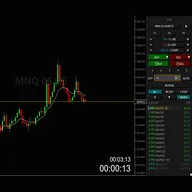
Valentin V.
Lead Quantitative Developer • Nexus Indicator • GitHub • LinkedIn
Valentin V. is the Lead Quantitative Developer at Nexus Indicator, specializing in developing high-precision tools and indicators for NinjaTrader 8. With over a decade of experience in C# and NinjaScript, he has helped hundreds of prop firm traders professionalize their execution workflows through technical discipline, systematic risk management, and automation.