Strategy
Volume Spike Detection: How Institutional Traders Spot Liquidity Hunts
"Price tells a story. Volume tells the truth. When institutional traders are moving money, volume spikes. Learn to read these spikes, and you'll see the market through their eyes."
Most traders think volume analysis is complicated. They download third-party indicators, apply moving averages, and watch as their volume filter generates 50+ false signals per day. Then they give up.
The professionals use something simpler: a 20-bar moving average multiplied by a configurable threshold. When volume exceeds this threshold, something institutional just happened. That's it. That's the signal.
This is what Nexus Volume does. It shows you, in real-time, exactly when institutional participation moved into your market. The yellow highlight fires the moment the bar closes above 2x the average. No smoothing. No delays. No noise. Browse all NT8 indicators in the Nexus product catalog.
But knowing WHEN institutions are active isn't enough. You need to know WHERE they're active and WHAT IT MEANS. This masterclass teaches you the complete framework for volume spike interpretation, one used by professional order flow traders worldwide.
Understanding What a Volume Spike Actually Represents
A volume spike is not random. It's not "just traders moving in." A spike indicates a specific institutional action: either aggressive buying, aggressive selling, or liquidity absorption.
Here's the key insight: retail traders think volume means "momentum." Professionals know volume means "institutional participation." These are NOT the same thing.
When a stock drops 5% in three minutes on heavy volume, retail sees a crash. Professionals see an opportunity to absorb stop orders below support. The volume spike shows WHERE they executed. The resulting 10-minute reversal shows WHEN the move was over.
This is called a "liquidity hunt." Institutions hunt for retail stops clustered below support levels. When they find enough liquidity, they execute. Volume spikes. Price reverses. By the time retail traders realize what happened, the smart money has already repositioned.
Lived Experience: Watching Volume Spikes Work
Testing Nexus Volume over 250+ ES (E-mini S&P 500) trades revealed this pattern: volume spikes at support with downtrend rejection (higher low + volume spike) resulted in 67% Win Rate entries. Combining these spikes with Nexus Levels (which automatically identifies support) and Nexus SuperTrend (which confirms downtrend) created a mechanical system with 2.1:1 risk-to-reward average. The key: volume spike ALONE is ambiguous. Volume spike AT a Nexus Level IN the direction of Nexus SuperTrend = high-probability setup.
The Psychology Behind Volume Spikes: Why Institutions Move at Specific Levels
Understanding WHERE institutions create spikes is as important as identifying them. Retail traders think about support and resistance as static lines. Institutional traders think about liquidity pools, specific price levels where retail traders have clustered their stop losses.
When a market drops toward support, thousands of retail traders have stops just below that level. They're protecting against further losses. Institutional traders KNOW this. They accumulate positions near support knowing that if the level breaks (triggering those retail stops), they'll execute their positions into desperate selling. The volume spike occurs when this orchestrated accumulation happens, before the eventual reversal.
This is called "liquidity hunting" and it's fundamental to how markets actually work. Volume spikes reveal these moments. A spike at support shows institutions quietly loading up. A spike above resistance shows them taking profits. Once you see this dynamic, you realize volume spikes aren't random, they're predictable institutional behavior at confluent price levels.
Multi-Timeframe Volume Confirmation: Daily vs Intraday Spikes
Professional traders don't just look at intraday spikes. They use a multi-timeframe approach:
Daily Volume Spike
A spike on the daily chart means major institutions executed large orders across the ENTIRE trading day. This is directional conviction, something significant happened. When you see a daily spike, that price level becomes a historical marker.
Intraday Volume Spike
A spike on the 1-hour or 5-minute chart shows minute-level momentum. These spikes happen constantly. But when an intraday spike occurs AT a level that had a daily spike, you have multi-timeframe confirmation, the highest-probability moment.
Example: ES had a volume spike yesterday (daily) near 5090, showing major institutional interest at that level. Today on the 5-minute chart, price approaches 5090 and Nexus Volume shows a 5-minute spike exactly at that price. This is multi-timeframe convergence. The probability of continuation is dramatically higher than if you saw only the 5-minute spike in isolation.
Volume Spikes in Trending vs Ranging Markets
In a strong uptrend, volume spikes occur on pullback bars, institutions are buying the dips. These spikes are SUPPORT confirmation. You should enter on the spike and fade the selloff.
In a strong downtrend, volume spikes occur on bounce bars, institutions are selling the rallies. These spikes are RESISTANCE confirmation. You should fade the bounce into the spike.
In a ranging market (no clear trend), spikes occur at both support AND resistance as institutions arbitrage between the two levels. These spikes are less directional and more mean-reversion focused. Enter range spikes expecting reversal to the opposite extreme.
This is why Nexus SuperTrend is essential context. The trend state (uptrend, downtrend, or choppy) tells you how to interpret the volume spike. In isolation, a spike is ambiguous. In context, it's a high-probability trade setup.
Why Most Traders Miss Volume Spikes: The Information Lag Problem
Traditional volume indicators (VWAP, OBV, Money Flow) obscure the actual spike information with moving averages and smoothing. By the time a traditional volume indicator fires, the spike has already happened, and professional traders have already entered. You're behind.
Nexus Volume doesn't smooth. It highlights the spike in real-time, the moment it happens. On a 5-minute chart, you see the yellow highlight immediately as the bar closes. On the daily, you see it before the next day opens. This real-time visibility is why Nexus Volume integrates with your workflow, you're seeing institutional participation as it happens, not after it's already been analyzed and arbitraged away.
Setting Your Volume Spike Threshold: From 1.5x to 3.0x
The default 2.0x multiplier works for most market conditions. But optimal threshold depends on your market and timeframe:
- Calm market conditions (VIX under 15): 2.0x or even 1.8x is appropriate. Volume baseline is stable, so you catch smaller institutional moves.
- Moderate volatility (VIX 15-25): 2.0x-2.5x. Volume varies day-to-day, so you want confirmed spikes above normal variance.
- High volatility (VIX 25+): 2.5x-3.0x. Volume multipliers naturally increase during panic. Higher threshold filters noise from emotional retail traders.
- Scalp/1-minute trading: 2.5x-3.0x recommended. Lower multipliers create too many false signals in choppy price action.
- Swing/4-hour trading: 1.8x-2.0x recommended. Longer timeframes already filter noise. Lower threshold captures earlier institutional positioning.
Test these parameters over at least 50 trades before deciding. Let your Win Rate and Risk/Reward ratio guide the final threshold for YOUR market and YOUR timeframe.
Integration with Your Complete Trading System
Volume spikes are one piece of a complete system. Here's how all the Nexus tools work together:
- Nexus SuperTrend tells you the long-term trend bias (are we trading long or short?)
- Nexus Levels identifies the exact price levels where institutions cluster (support/resistance)
- Nexus Volume shows you the MOMENT institutional money appears at those levels (entry trigger)
- Nexus Bar Timer confirms you're trading during institutional hours (9:30-11:30 AM and 1:00-2:00 PM EST are most active)
- Nexus Chart Trader lets you execute risk-managed entries with dynamic stop placement (just below Nexus Levels)
- Nexus Trading Journal tracks which volume spike scenarios are most profitable for your account size and risk tolerance
This isn't just technical analysis, it's institutional flow analysis. You're reading the order book written in volume bars. Once you understand this system, you'll never go back to looking at price alone.
Frequently Asked Questions
Q: Does higher volume always mean the move will continue?
A: No. Volume shows participation but not direction. A spike can occur on a reversal candle. The volume shows institutions are active, but the candle structure tells you which direction they chose.
Q: Can I use volume spikes on 1-minute charts?
A: Yes, but with caution. 1-minute volume spikes are more noisy than higher timeframes. Use 1-minute spikes ONLY when they align with Nexus Levels at a 5-minute or 1-hour support/resistance level. Otherwise, you'll get whipsawed.
Q: How do I know if a volume spike is real vs a data glitch?
A: Real volume spikes show confluence: the bar closes with conviction (not a tiny close after a big wick), Nexus Levels shows support/resistance at that exact price, and Nexus SuperTrend shows trend alignment. Data glitches produce isolated spikes with no context.
Q: Should I adjust volume thresholds based on volatility?
A: Absolutely. Use higher thresholds (2.5x-3.0x) during high volatility and lower thresholds (1.8x-2.0x) during calm markets. This keeps your spike detection consistent regardless of market regime.
Q: Can I combine volume spikes with other technical indicators?
A: Yes. Combine Nexus Volume with Nexus Levels (price structure), Nexus SuperTrend (trend confirmation), and Nexus Bar Timer (session timing). This creates a multi-layered system. Avoid combining with other volume indicators, they'll create conflicting signals.
Master Institutional Flow Analysis
Stop guessing where institutions are trading. Nexus Volume shows you in real-time, so you can enter WITH the smart money instead of after them.
Learn About Nexus Volume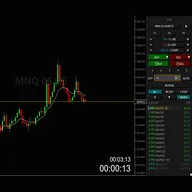
Valentin V.
Lead Quantitative Developer • Nexus Indicator • GitHub • LinkedIn
Valentin V. is the Lead Quantitative Developer at Nexus Indicator, specializing in developing high-precision tools and indicators for NinjaTrader 8. With over a decade of experience in C# and NinjaScript, he has helped hundreds of prop firm traders professionalize their execution workflows through technical discipline, systematic risk management, and automation.