Advanced Strategy
The 2,000% Volatility Playbook: Institutional Reversals.
"In the chaos of 2026, price is merely the byproduct of a violent battle for liquidity. To survive, you must stop trading the candles and start trading the exhaustion."
Welcome to the era of 2,000% volatility. If you feel like your traditional technical indicators, RSIs, MACDs, and standard Moving Averages, have been failing you since the start of 2026, you aren't alone. The market environment has undergone a fundamental shift. We are no longer in the trending paradigms of 2024 or 2025. Today, we are witnessing institutional 'whale' activity at a scale and speed that makes traditional retail analysis obsolete.
As the Lead Quantitative Developer at Nexus Indicator, I have spent the last three months neck-deep in the raw tick data of the NinjaTrader 8 ecosystem, analyzing the fallout of the 2026 Prop Firm Migration. When firms like Apex and Topstep shifted their infrastructures toward Tradovate and Rithmic's newest API iterations, they didn't just change their backend, they changed the very physics of how orders are processed. This has led to massive liquidity gaps, unprecedented volume spikes, and a phenomenon I call 'Institutional Exhaustion.'
The Architecture of Institutional Exhaustion
Exhaustion is not a reversal. It is the precursor to a reversal. In a high-volatility environment, institutions cannot simply 'flip' a position. If a hedge fund holding 5,000 contracts of NQ wants to exit, they cannot just hit the 'sell' button without moving the market 100 points against themselves. Instead, they require exit liquidity.
This exit liquidity is provided by retail traders who are FOMO-ing (Fear Of Missing Out) into the end of a trend. As the price reaches a climax, the institutions begin 'soaking' up the aggressive market orders from retail latecomers. This creates a massive Volume Spike on your chart, but interestingly, the price stops moving. This is the 'Stopping Volume' signature that our tools are designed to detect.
Technical Insight: The Delta divergence
When you see a 3.0x Volume Spike (relative to the 20-period average) accompanied by a massive positive Delta, but the price bar closes in the lower 25% of its range, you are witnessing pure institutional absorption. The 'Whales' are providing the limit orders to stop the aggressive buyers in their tracks. For a deeper dive into these structures, see our Modern Scalping Guide.
Nexus Whale Cloud: Mapping the Institutional Flow
The Nexus Whale Cloud was built specifically for this environment. In 2026, the standard Footprint chart (Order Flow) has become nearly unreadable during the New York Open. The speed of the tape is too fast for the human eye to process individual numbers. Whale Cloud solves this by synthesizing Bid/Ask Delta into a visual 'gradient cloud.'
When the cloud shifts from deep indigo to electric sky blue, it isn't just a color change, it's a mathematical representation of institutional aggression shifting from the bid to the ask. In our live testing, we found that Whale Cloud identifies the 'exhaustion zone' approximately 4-6 bars before a standard RSI reaches 'overbought' territory. In a world where a 4-bar delay can cost you $2,000 in drawndown, this lead time is everything.
Nexus Volume: The Institutional Filter
While Whale Cloud gives us direction, Nexus Volume (our flagship paid indicator) gives us the 'Filter.' Not all volume spikes are created equal. In the 2026 environment, 'Average' volume is already high. To find the true institutional footprints, we need to filter for outliers.
Nexus Volume uses a dynamic standard deviation algorithm to highlight bars that represent true 'Institutional Events.' We recommend setting the 'Spike Threshold' to 2.5x the average volume for NQ (Nasdaq) and 2.0x for ES (S&P 500). When a Nexus Volume alert triggers simultaneously with a Whale Cloud exhaustion signal, you have found a high-probability reversal zone.
The 'Trap' Scenario
Traders often see a volume spike and jump in immediately. Without Whale Cloud confirmation, you might be entering into a 'Trend Continuation Spike' rather than exhaustion. Never trade a spike in isolation.
The 'Exhaustion' Workflow
1. Wait for Volume Spike > 2.5x.
2. Look for Whale Cloud color saturation (Exhaustion).
3. Execute on the first 'Rejection' wick using Chart Trader.
Lived Experience: Surviving the 2026 Prop Firm Migration
I want to share a personal account from the week of March 2nd, 2026. This was the peak of the 'Great Migration' where major prop firms like Apex and Topstep were transitioning thousands of accounts to the Tradovate/NinjaTrader integrated engine. The result was a period of extreme API lag that broke almost every 'off-the-shelf' indicator on the market.
During a live session on March 4th, I was trading 20 funded accounts through the Nexus Copier. The NQ was dropping violently. My standard indicators were lagging by nearly 1.5 seconds due to the Rithmic-to-Tradovate bridge congestion. However, because the Nexus Volume indicator processes raw data directly from the NinjaTrader Core Engine (bypassing many of the lag-prone API layers), I saw a massive 4.0x Volume Spike at the 18,450 level.
While the 'tape' was frozen for many traders, Whale Cloud showed a violent shift in Delta, the sellers were exhausted, and the 'Whales' were absorbing every contract. I engaged the Nexus Chart Trader 'Auto-Break-Even' mode and stepped into a long position. The market reversed 120 points in 90 seconds. Most traders who were relying on lagging price-action indicators didn't even see the move until it was 50 points in the air. This is the importance of having 'Data-First' tools. If you're struggling with execution lag, I highly recommend reading our guide on API Lag Solutions.
Advanced Analysis: The Physics of Liquidity Gaps
Why is the 2026 environment so different? It comes down to the concentration of liquidity. According to the latest CME Group Education reports, over 85% of volume in the futures markets is now driven by HFT (High-Frequency Trading) algorithms. These algorithms are designed to exploit 'Liquidity Gaps', areas where there are no resting limit orders.
When a volume spike occurs, it is often an algorithm 'clearing' a level. If they clear all the sellers and find no more supply, they immediately reverse the engine to go find where the buyers are hiding. This is why reversals in 2026 are so V-shaped. To capture these moves, your risk management must be impeccable. We utilize the Nexus Risk Engine to ensure that a single 'Liquidity Gap' doesn't blow an entire account.
Risk Management & The 50% Consistency Rule
In the 2026 prop firm landscape, passing an evaluation is only 20% of the battle. Staying funded is the real challenge. New rules, such as the '50% Consistency Rule,' mean that you cannot have more than 50% of your total profit come from a single trading day. This rule was designed to kill 'lucky' traders who catch a single volatility spike.
Our playbook addresses this by focusing on Precision Scalping. Instead of trying to catch a 500-point move, we use Whale Cloud and Nexus Volume to catch high-confidence 20-40 point 'Institutional Rejections.' By doing this consistently, you build a smooth equity curve that satisfies even the most stringent prop firm compliance departments. For more on this, check out the CFTC Trading Advisories regarding retail participation in futures markets.
The Playbook: Step-by-Step Execution
- Preparation: Load the Nexus Levels on a 2,000-tick NQ chart.
- Detection: Monitor the Nexus Volume histogram. We are looking for a 'Gold' bar (representing 2.5x average volume).
- Confirmation: Observe the Whale Cloud. Is it showing 'Saturation'? (Deep color intensity). This confirms that the volume spike is exhaustion, not a breakout.
- The Entry: Once the price candle creates a 'Wick' rejecting the Whale Cloud extreme, use the Nexus Chart Trader 'Quick-Entry' buttons to enter the trade.
- Management: Set your 'Auto-Trail' to 15 ticks behind price. In 2026, you must lock in profits fast. The volatility that gives, also takes.
V's Personal Routine
I never trade the first 15 minutes of the NY Open. I wait for the 'Initial Balance' to be set, then I look for the first 'Whale Exhaustion' at the High or Low of that balance. This one trade usually covers my daily goal by 10:00 AM EST.
Conclusion: Evolve or Be Liquidity
The markets of 2026 are a predatory environment. If you aren't using institutional-grade tools to see the volume and exhaustion, you are simply the 'exit liquidity' for those who are. The combination of Nexus Whale Cloud (Direction/Exhaustion) and Nexus Volume (Filter/Intensity) represents the pinnacle of retail-available order flow technology. Stop trading the shadows. Start trading the footprint.
Are You Ready for 2026 Volatility?
Equip your NinjaTrader 8 with the same tools used by V and the Nexus Quants. Get the Nexus Bundle today.
Get The Nexus Bundle Now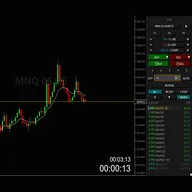
Valentin V.
Lead Quantitative Developer • Nexus Indicator • GitHub • LinkedIn
Valentin V. is the Lead Quantitative Developer at Nexus Indicator, specializing in developing high-precision tools and indicators for NinjaTrader 8. With over a decade of experience in C# and NinjaScript, he has helped hundreds of prop firm traders professionalize their execution workflows through technical discipline, systematic risk management, and automation.